
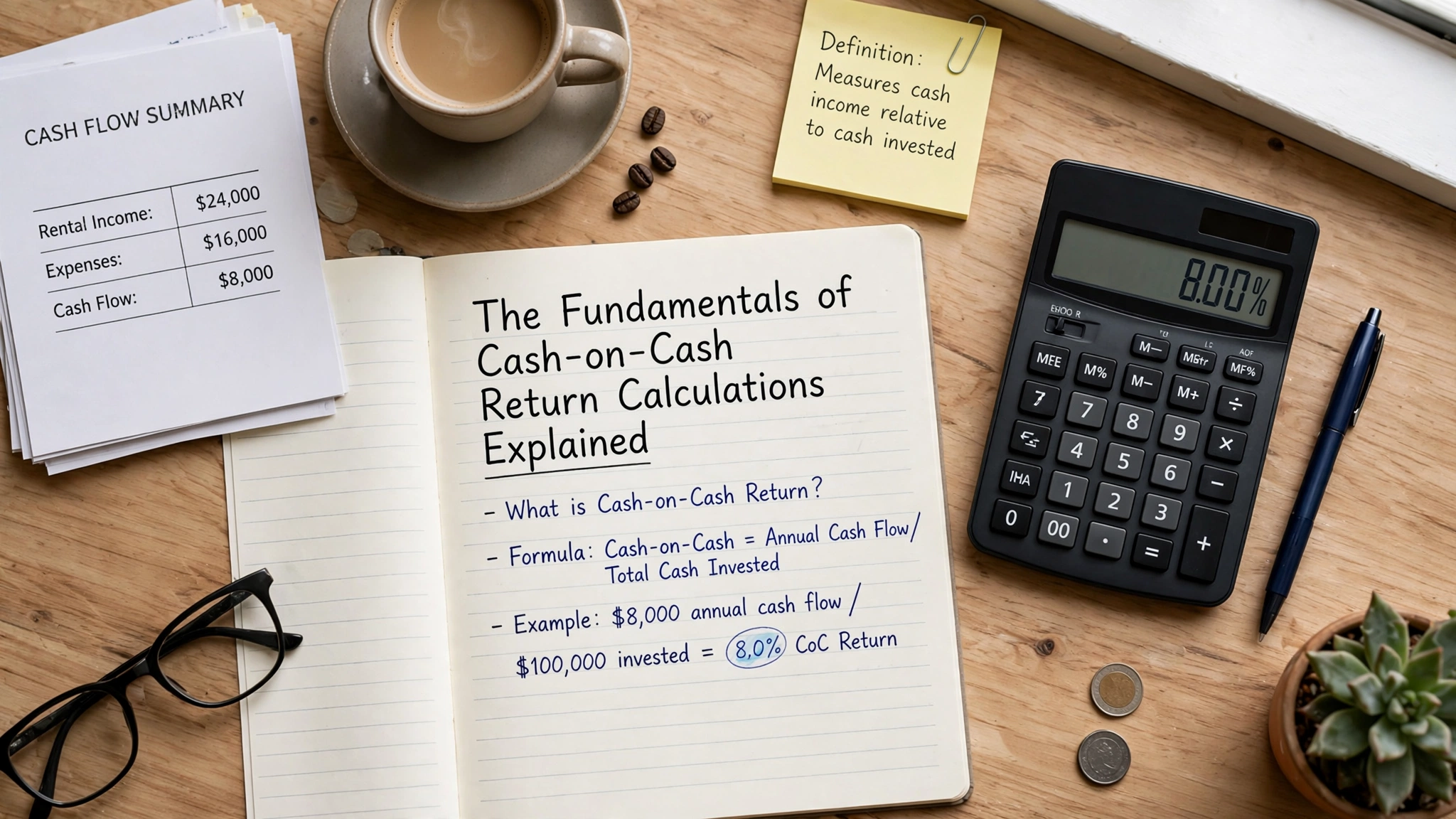
Are you tired of feeling overwhelmed by the complexities of real estate investment calculations? Do terms like cash-on-cash return leave you scratching your head, unsure of where to even begin? If so, you’re not alone. Many aspiring investors struggle to grasp the fundamentals of financial analysis, making it challenging to evaluate the profitability of potential deals accurately.
Imagine the frustration of missing out on lucrative investment opportunities simply because you couldn’t confidently calculate and compare cash-on-cash returns. Picture yourself hesitating to take the next step in your real estate journey, held back by a lack of understanding in this critical area. The consequences of not mastering cash-on-cash return calculations can be significant, leading to missed chances for wealth creation and growth in your investment portfolio.
But fear not, as there is a solution to demystify cash-on-cash return calculations and empower you to make informed investment decisions with confidence. By understanding the fundamentals of this essential metric, you can unlock the potential to identify high-performing properties, maximize your returns, and achieve your financial goals in real estate. So buckle up and get ready to delve into the world of cash-on-cash return calculations – your gateway to financial success in real estate awaits!
Importance of Cash-on-Cash Return in Real Estate Investing
Cash-on-Cash Return is a crucial metric in real estate investing as it provides investors with a clear understanding of the profitability of their investment. By calculating the ratio of the pre-tax cash flow generated by an investment property to the initial capital investment, investors can make informed decisions about the viability of a real estate opportunity. This metric helps investors assess the potential returns on their investment relative to the amount of cash they have put in, allowing for a more accurate comparison between different investment options.
Understanding the Cash-on-Cash Return in real estate investing also helps investors evaluate the risk associated with a particular property. By analyzing how much cash flow the property generates relative to the initial investment, investors can determine the level of income they can expect to receive on an ongoing basis. This information is essential for investors looking to build a diversified real estate portfolio that maximizes returns while managing risk effectively.
Maximizing Cash-on-Cash Return Through Property Management Strategies
Effective property management strategies play a significant role in maximizing the Cash-on-Cash Return of an investment property. By implementing efficient property management practices, investors can optimize rental income, minimize vacancies, and reduce operating expenses, ultimately increasing the cash flow generated by the property. Proactive maintenance, tenant screening, and strategic marketing efforts are key components of successful property management that can positively impact the Cash-on-Cash Return.
Moreover, implementing technology solutions and automation in property management can streamline processes, improve efficiency, and enhance the overall performance of an investment property. Leveraging data analytics and market insights can help property managers make informed decisions that boost rental income and property value, ultimately leading to a higher Cash-on-Cash Return for investors. By focusing on effective property management strategies, investors can unlock the full potential of their real estate investments and achieve optimal financial outcomes.
Importance of Cash-on-Cash Return in Real Estate Investing
Cash-on-Cash return is a crucial metric in real estate investing as it provides investors with a clear picture of the profitability of their investment. This metric calculates the annual return earned on the total cash invested in a property, making it a valuable tool for assessing the performance of real estate assets. Investors use Cash-on-Cash return to evaluate the efficiency of their investment by comparing the cash income generated with the initial cash investment.
By understanding the Cash-on-Cash return, investors can make informed decisions on whether a particular property is a sound investment opportunity. This metric helps investors assess the potential profitability of a property, taking into account the actual cash returns generated rather than relying solely on projected figures. Real estate investors use Cash-on-Cash return to compare different investment opportunities, assess risk levels, and determine the most lucrative options for maximizing returns on their cash investments.
Calculating Cash-on-Cash Return: A Step-by-Step Guide
Calculating Cash-on-Cash return involves a straightforward formula that divides the annual pre-tax cash flow generated by a property by the total cash investment. To calculate Cash-on-Cash return, you first need to determine the net operating income (NOI) earned from the property, which includes rental income and operating expenses. Once you have the NOI figure, subtract any debt service payments to arrive at the pre-tax cash flow.
Next, divide the pre-tax cash flow by the total cash invested in the property, which includes the down payment, closing costs, and any initial renovation expenses. The resulting percentage represents the Cash-on-Cash return, indicating the annual return earned on the cash invested in the property. By following this step-by-step guide, investors can accurately calculate the Cash-on-Cash return to assess the profitability of their real estate investments.

Factors Affecting Cash-on-Cash Return in Investment Properties
Cash-on-Cash return in investment properties can be influenced by various factors that investors need to consider before making a purchase. One crucial factor is the initial investment amount, which includes the down payment, closing costs, and any renovation expenses. A higher initial investment will impact the cash-on-cash return percentage, potentially lowering the overall profitability of the investment.
Another key factor is the property’s operating expenses, such as maintenance costs, property management fees, property taxes, and insurance premiums. Higher operational costs can eat into the property’s cash flow, reducing the cash-on-cash return. Additionally, vacancy rates and rental income fluctuations can significantly affect the cash-on-cash return, making it essential for investors to conduct thorough market research and financial analysis before committing to an investment property.
Real-Life Examples of Cash-on-Cash Return Calculations
Real-life examples of cash-on-cash return calculations can provide valuable insights for investors looking to assess the profitability of their real estate investments. For instance, consider a scenario where an investor purchases a rental property for $200,000, with an annual net operating income of $20,000. After factoring in the initial investment amount and operating expenses, the investor calculates the cash-on-cash return to be 10%.
By analyzing real-life examples of cash-on-cash return calculations, investors can better understand how different variables impact the overall return on investment. These examples can serve as a practical guide for investors to evaluate the financial performance of their investment properties and make informed decisions to maximize their cash-on-cash return.
Real-Life Examples of Cash-on-Cash Return Calculations
Cash-on-Cash return calculations provide investors with a clear picture of the profitability of their real estate investments. For instance, consider a scenario where an investor purchases a rental property for $200,000, puts down a $50,000 down payment, and incurs $10,000 in closing costs. The property generates $20,000 in annual net operating income. By applying the cash-on-cash return formula [(Net Operating Income / Total Cash Invested) x 100%], we can calculate the cash-on-cash return as follows:
Cash-on-Cash Return = ($20,000 / ($50,000 + $10,000)) x 100% = (20,000 / 60,000) x 100% = 33.33% This indicates that for every dollar invested in the property, the investor is earning a return of 33.33 cents. Real-life examples like this help investors assess the performance of their investments and make informed decisions based on actual numbers.
Maximizing Cash-on-Cash Return Through Property Management Strategies
Effective property management strategies play a crucial role in maximizing cash-on-cash return for real estate investors. One key strategy is to ensure efficient maintenance and upkeep of the property to minimize vacancy periods and attract quality tenants. Implementing rent optimization techniques, such as regular market analysis and adjusting rental rates accordingly, can also enhance cash flow and improve cash-on-cash return.
Additionally, leveraging technology and automation tools for property management tasks can streamline operations, reduce costs, and free up time for investors to focus on expanding their portfolios. By employing proactive management practices, monitoring expenses closely, and fostering positive tenant relationships, investors can boost their cash-on-cash return and achieve long-term success in real estate investing.
6. Maximizing Cash-on-Cash Return Through Property Management Strategies
Property management strategies play a crucial role in maximizing cash-on-cash return in real estate investments. Effective property management involves maintaining the property in good condition, keeping vacancies low, and ensuring timely rent collection. By implementing proactive maintenance schedules and conducting regular inspections, property managers can increase the property’s value and attract higher-paying tenants.
Furthermore, leveraging technology such as property management software can streamline operations, improve communication with tenants, and optimize workflows. By utilizing data analytics and performance metrics, property managers can identify areas for improvement and make informed decisions to enhance the property’s profitability. Additionally, providing exceptional customer service and building strong relationships with tenants can lead to longer lease terms and lower turnover rates, ultimately increasing cash flow and maximizing cash-on-cash return.
7. Common Mistakes to Avoid When Calculating Cash-on-Cash Return
When calculating cash-on-cash return in real estate investing, it’s important to avoid common mistakes that can skew the results and mislead investors. One common mistake is underestimating expenses or failing to account for all costs associated with the investment property. It’s essential to include not only direct expenses like maintenance and property taxes but also indirect costs such as vacancy losses and property management fees.
Another common error is overlooking the impact of financing terms on cash-on-cash return. Investors should accurately calculate the financing costs, including interest rates and loan terms, to determine the true return on investment. Additionally, failing to consider potential risks and market fluctuations can lead to inaccurate projections of cash-on-cash return. By conducting thorough due diligence and using realistic assumptions, investors can avoid these pitfalls and make informed decisions when evaluating investment opportunities.
Common Mistakes to Avoid When Calculating Cash-on-Cash Return
Calculating Cash-on-Cash return is crucial in real estate investing, but there are common mistakes that investors should avoid to ensure accurate financial analysis. One common mistake is not accounting for all expenses associated with the property, leading to an inaccurate calculation of the return on investment. It is essential to include all costs such as property taxes, insurance, maintenance, and management fees to get a true reflection of the cash flow.
Another mistake to avoid is not considering the financing terms properly. Investors should accurately calculate the initial investment, including down payment, closing costs, and any additional fees associated with the loan. Failing to include these costs can skew the Cash-on-Cash return calculation, giving an unrealistic view of the investment’s profitability. By being diligent in accounting for all expenses and financing terms, investors can make informed decisions and accurately assess the potential returns on their real estate investments.