
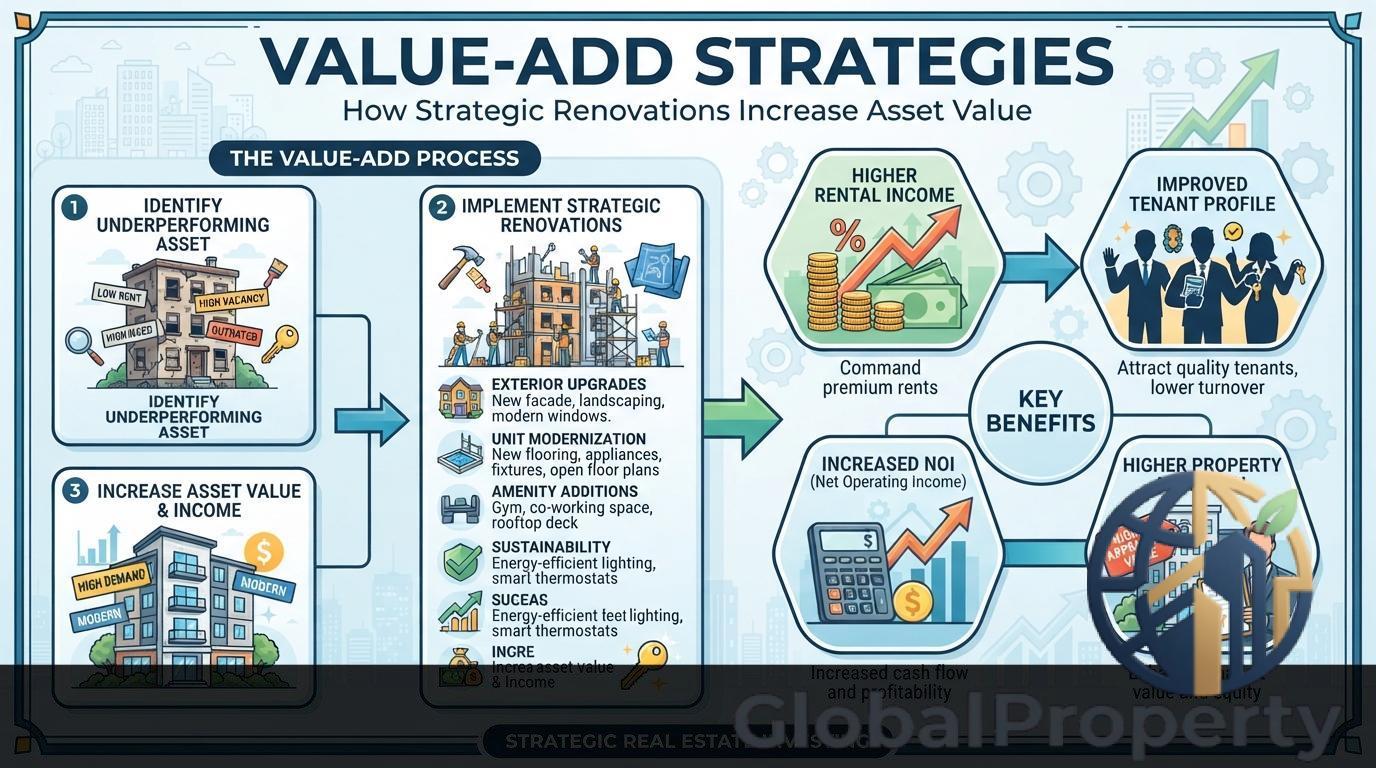
Are you a property owner looking to maximize the value of your assets but feeling stuck on how to achieve significant growth? The core problem many investors face is understanding how strategic renovations can directly impact the value of their properties. It’s not just about giving a space a fresh coat of paint or updating fixtures; it’s about implementing value-add strategies that can transform your property into a lucrative investment.
Imagine the frustration of pouring money into renovations only to see minimal returns on your investment. Without a clear understanding of which renovations will add the most value, you could be missing out on the opportunity to significantly increase the worth of your property. The consequences of not strategically approaching renovations can lead to wasted resources, stagnant property values, and missed chances to attract high-quality tenants or buyers.
But fear not, there is a solution to this dilemma. By implementing targeted value-add strategies, you can unlock the full potential of your property and see a substantial increase in asset value. From identifying key areas for improvement to understanding market trends and tenant preferences, strategic renovations can set your property apart in a competitive market. Get ready to delve into the world of value-add strategies and discover how you can elevate your property’s value to new heights. Let’s embark on this transformative journey together!
Understanding Value-Add Strategies
Value-add strategies in real estate involve making targeted improvements to a property to increase its overall worth. These strategies aim to enhance the property’s attractiveness to potential tenants or buyers, ultimately leading to higher returns on investment. By identifying areas of improvement, such as upgrading amenities, enhancing curb appeal, or optimizing operational efficiencies, property owners can strategically add value to their assets. Implementing value-add strategies requires a deep understanding of market trends, tenant preferences, and the competitive landscape to ensure that the enhancements align with the target audience’s needs.
Factors Influencing Asset Value
Several factors influence asset value in real estate, including location, market demand, property condition, and economic trends. The location of a property plays a significant role in determining its value, with proximity to amenities, transportation hubs, and desirable neighborhoods typically commanding higher prices. Market demand also impacts asset value, as properties in high-demand areas can experience appreciation faster than those in saturated markets. Property condition, including age, maintenance, and overall appeal, can directly affect asset value, as well as economic trends like interest rates and job growth. Understanding these factors is crucial for property owners looking to maximize the value of their investments through strategic decision-making and targeted improvements.
Factors Influencing Asset Value
Asset value is influenced by various factors that need to be carefully assessed and managed in order to maximize returns. One key factor is the location of the property, as properties in prime locations tend to have higher values due to factors such as accessibility, amenities, and demand. The condition of the property also plays a crucial role in determining its value, as well-maintained properties are more attractive to tenants and investors.
Market conditions, economic trends, and interest rates are external factors that can impact asset value. Understanding these factors and their potential impact on the property market is essential for making informed decisions when it comes to managing and enhancing asset value. By analyzing and addressing these influencing factors, property owners and investors can strategically position their assets for long-term growth and profitability.

Types of Strategic Renovations
Strategic renovations play a pivotal role in enhancing the value of a property. These renovations are carefully planned and executed to maximize the return on investment for property owners. One common type of strategic renovation is cosmetic upgrades, which focus on improving the visual appeal of a property. This may include updating paint, flooring, fixtures, and other aesthetic elements to attract potential buyers or tenants.
Another type of strategic renovation is functional upgrades, which aim to improve the functionality and usability of a property. This could involve renovating kitchens, bathrooms, or other key areas to make the property more appealing and valuable. By strategically choosing renovations that align with market demands and trends, property owners can effectively increase the overall value of their assets.
Implementing Value-Add Strategies
Implementing value-add strategies requires a comprehensive approach that considers the unique characteristics of each property. This process typically involves conducting a thorough analysis of the property, market trends, and potential opportunities for improvement. Property owners must carefully assess the current value of their assets and identify areas where value can be added through strategic renovations or upgrades.
Once a plan is in place, property owners can begin implementing value-add strategies by working with contractors, designers, and other professionals to execute the necessary renovations. Effective project management and communication are essential during this phase to ensure that renovations are completed on time and within budget. By successfully implementing value-add strategies, property owners can significantly increase the overall value of their assets and achieve greater returns in the long run.
Implementing Value-Add Strategies
In order to successfully implement value-add strategies for a property, it is crucial to have a clear plan and understanding of the goals you aim to achieve. Start by conducting a comprehensive assessment of the current state of the asset, identifying areas that have potential for improvement. This could include enhancing curb appeal, upgrading amenities, improving energy efficiency, or implementing technology upgrades.
Next, develop a detailed timeline and budget for the renovations or improvements needed. It is important to prioritize projects based on their potential impact on increasing the property’s value. Effective communication with all stakeholders involved, including property managers, contractors, and investors, is key to ensuring a smooth execution of the value-add strategies. Regular monitoring and tracking of progress against set goals will help in evaluating the success of the implementation and making adjustments as necessary.
Case Studies: Successful Asset Value Increase
Examining successful case studies of asset value increase can provide valuable insights and inspiration for property owners and investors looking to implement value-add strategies. By studying real-life examples of properties that have undergone successful renovations or improvements resulting in increased asset value, one can learn about the strategies and tactics that were employed.
Case studies can showcase different types of properties, such as residential, commercial, or mixed-use, and highlight the specific challenges faced and overcome during the value-add process. Analyzing the before-and-after scenarios, along with the financial outcomes, can help in understanding the tangible benefits of investing in strategic renovations. These case studies serve as a practical guide for implementing similar value-add strategies in other properties to achieve a significant increase in asset value.
Case Studies: Successful Asset Value Increase
Case studies are a valuable tool to showcase the effectiveness of value-add strategies in real-life scenarios. By examining successful asset value increase stories, investors and property managers can gain insights into the specific tactics and approaches that have yielded positive results. These case studies provide concrete examples of how strategic renovations and improvements can lead to substantial growth in asset value over time. By analyzing the before-and-after data, stakeholders can better understand the impact of value-add strategies on the overall performance and profitability of a property.
Case Study 1: Apartment Complex Revitalization
In this case study, a property management company implemented a series of strategic renovations and upgrades to an aging apartment complex. By modernizing the units, improving common areas, and enhancing amenities, the property was able to attract higher-quality tenants and command higher rental rates. As a result, the asset value of the apartment complex increased significantly, leading to improved cash flow and overall return on investment for the owners.
Case Study 2: Retail Property Repositioning
Another compelling example is the repositioning of a struggling retail property through value-add strategies. By rebranding the property, attracting new anchor tenants, and optimizing the tenant mix, the property owner was able to revitalize the shopping center and drive foot traffic. This, in turn, led to increased lease rates, higher occupancy levels, and ultimately a substantial increase in the asset value of the retail property. These case studies demonstrate the power of strategic renovations and value-add initiatives in transforming underperforming assets into successful and lucrative investments.
Conclusion
Maximizing asset value through strategic renovations and value-add strategies is crucial in the real estate industry. By understanding the factors that influence asset value and implementing the right renovations, property owners can significantly increase their returns on investment. The case studies presented in this guide demonstrate the effectiveness of these strategies in practice, showcasing real-world examples of successful asset value increase. It is clear that a well-thought-out value-add strategy can lead to substantial improvements in property value and overall profitability.