
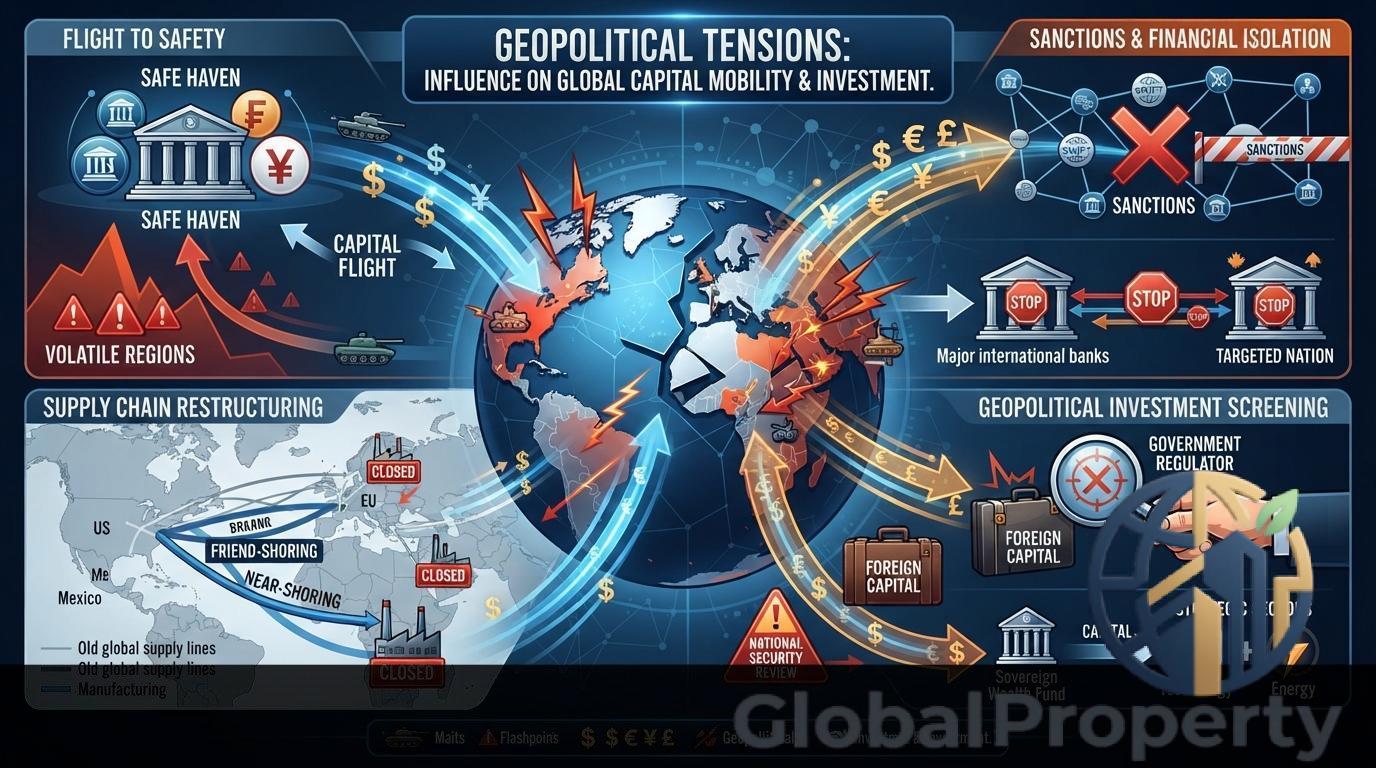
In today’s interconnected world, geopolitical tensions have become a defining factor in shaping global capital mobility and investment decisions. The intricate dance between nations, fueled by political, economic, and social factors, creates a complex landscape that investors must navigate with caution. The problem lies in the unpredictability and volatility that geopolitical tensions introduce into the financial markets, making it challenging for investors to make informed decisions and manage risks effectively.
Imagine a scenario where escalating trade disputes between major economies lead to sudden shifts in currency values, stock market crashes, and disruptions in supply chains. The ripple effects of geopolitical tensions can have far-reaching consequences, affecting not only large multinational corporations but also individual investors and small businesses. The uncertainty and instability that arise from such conflicts can erode investor confidence, hinder economic growth, and create a climate of fear and hesitation in the markets.
However, amidst this chaos and uncertainty, there are strategies and tools that savvy investors can leverage to navigate the complex world of global capital mobility. By understanding the underlying dynamics of geopolitical tensions, identifying key risk factors, and diversifying their investment portfolios, investors can not only protect their assets but also capitalize on opportunities that arise during times of upheaval. Join me as we delve deeper into how geopolitical tensions influence global capital mobility and investment decisions, and explore practical solutions to thrive in this ever-evolving landscape.
Geopolitical Tensions: Definition and Impact
Geopolitical tensions refer to the conflicts and disputes between nations or regions that have the potential to impact global stability, economics, and security. These tensions can arise due to territorial disputes, ideological differences, resource competition, or historical grievances. The impact of geopolitical tensions on the economy can be significant, leading to fluctuations in the stock market, changes in commodity prices, disruptions in trade, and increased volatility in financial markets. Investors and businesses need to closely monitor geopolitical developments to assess risks and opportunities for their investments.
Global Capital Mobility: Overview
Global capital mobility refers to the flow of financial assets across borders, allowing investors to diversify their portfolios and seek higher returns in different markets. In today’s interconnected world, capital moves swiftly and easily between countries, driven by factors such as interest rates, economic growth, political stability, and market trends. The ease of capital mobility has both benefits and risks, as it can enhance liquidity, promote economic growth, and facilitate investments, but also expose economies to external shocks and contagion effects. Understanding global capital mobility is crucial for investors looking to navigate the complexities of the international financial landscape.
Global Capital Mobility: Overview
Global capital mobility refers to the free flow of capital across international borders, allowing investors to allocate their funds globally. In today’s interconnected world, capital can move swiftly between countries, seeking the most favorable investment opportunities. This movement of capital is facilitated by advancements in technology, financial innovation, and liberalized economic policies.
Global capital mobility has both benefits and challenges. On the positive side, it allows for diversification of investment portfolios, access to new markets, and opportunities for higher returns. However, it also exposes economies to risks such as sudden capital outflows, currency fluctuations, and financial contagion. Understanding the dynamics of global capital mobility is crucial for investors, policymakers, and businesses to navigate the complexities of the global financial system.
Investment Opportunities in Times of Geopolitical Tensions
Geopolitical tensions can create uncertainty and volatility in financial markets, presenting both risks and opportunities for investors. During periods of geopolitical instability, traditional safe-haven assets like gold, government bonds, and currencies of stable countries may see increased demand as investors seek to preserve capital.
However, there are also investment opportunities that emerge in times of geopolitical tensions. Industries such as defense, cybersecurity, and energy may benefit from increased government spending or strategic shifts in policy. Additionally, sectors that are less sensitive to geopolitical events, such as healthcare or consumer goods, may provide stability and long-term growth prospects. It is essential for investors to carefully assess the risks and rewards of different investment opportunities during periods of geopolitical uncertainty.

Investment Opportunities in Times of Geopolitical Tensions
Investment opportunities in times of geopolitical tensions may seem daunting, but they also present unique chances for savvy investors. During periods of uncertainty, certain sectors may thrive while others falter. It’s crucial to analyze the geopolitical landscape carefully to identify areas of potential growth. For example, industries such as defense, cybersecurity, and commodities may see increased demand during times of geopolitical instability. Additionally, investing in safe-haven assets like gold or government bonds can provide stability in volatile markets. Diversification and staying informed are key strategies for capitalizing on investment opportunities amidst geopolitical tensions.
Case Studies: Geopolitical Tensions and Investment
Examining case studies of geopolitical tensions and investment can provide valuable insights into how markets react to global events. For instance, past conflicts or trade disputes have led to fluctuations in stock prices, currency valuations, and commodity markets. By studying these cases, investors can better understand the potential impacts of geopolitical tensions on their portfolios and make informed decisions. Case studies also highlight the importance of risk management and contingency planning in uncertain times. Learning from historical examples can help investors navigate the complexities of geopolitics and position themselves for success.
Case Studies: Geopolitical Tensions and Investment
Case studies provide valuable insights into the relationship between geopolitical tensions and investment decisions. By examining real-world scenarios, investors can learn from past experiences and make more informed choices. One such case study involves the impact of trade wars on global markets. As tensions rise between major economies, stock prices can fluctuate dramatically, creating both risks and opportunities for investors. Understanding the dynamics at play in these situations is crucial for navigating turbulent times.
Another example of the intersection between geopolitical tensions and investment is the effect of political instability on emerging markets. When governments undergo changes or face internal conflicts, foreign investments can be at risk. However, astute investors who are able to assess the situation accurately may identify undervalued assets with significant growth potential. These case studies underscore the importance of staying informed and adaptable in the face of geopolitical uncertainties.
Strategies for Managing Capital in a Volatile Geopolitical Environment
Investors facing a volatile geopolitical landscape must adopt strategic approaches to safeguard their capital and maximize returns. Diversification is key, spreading investments across different asset classes, regions, and industries to mitigate risks associated with geopolitical tensions. Additionally, staying informed and conducting thorough research are essential for making well-informed investment decisions. Monitoring geopolitical developments, understanding their potential impact on markets, and adjusting investment strategies accordingly are crucial aspects of managing capital effectively.
Furthermore, having a long-term perspective and avoiding knee-jerk reactions to short-term geopolitical events can help investors navigate uncertainties and build resilience in their portfolios. Implementing risk management techniques, such as setting stop-loss orders and hedging strategies, can provide a layer of protection during turbulent times. Collaborating with financial advisors or portfolio managers with expertise in geopolitics can also offer valuable insights and guidance in managing capital in a volatile geopolitical environment.
Conclusion
Geopolitical tensions impact global capital mobility and investment opportunities, requiring strategic management to navigate volatile environments successfully. As highlighted in the case studies, understanding the relationship between geopolitical events and financial markets is crucial for making informed investment decisions. By implementing sound strategies and staying informed about geopolitical developments, investors can identify opportunities even during times of uncertainty.
In conclusion, while geopolitical tensions introduce risks, they also create potential for savvy investors to capitalize on market fluctuations. By leveraging insights from this analysis, individuals and institutions can enhance their investment performance and build resilience in the face of geopolitical challenges.