
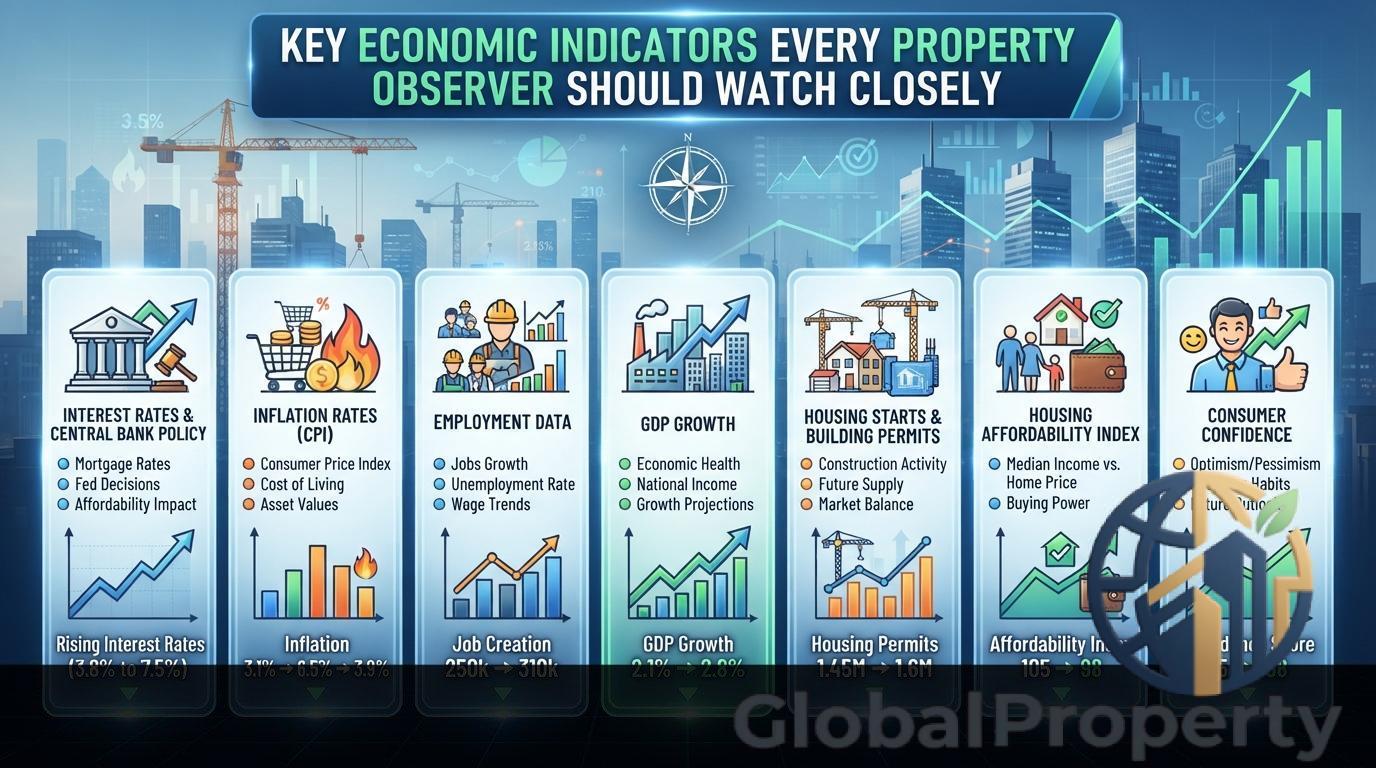
Are you an avid property observer eager to stay ahead in the ever-evolving real estate market? One of the biggest challenges you may encounter is navigating the complex web of economic indicators that can significantly impact property prices and market trends. Understanding these key economic indicators is not just important; it’s crucial for making informed decisions in the property market. Without this knowledge, you might find yourself adrift in a sea of uncertainty, unable to predict market shifts or identify lucrative investment opportunities.
Imagine the frustration of witnessing property prices fluctuate without being able to comprehend the underlying reasons. Picture the consequences of missing out on lucrative deals or making uninformed investment decisions due to a lack of insight into the economic forces at play. The real estate market is a dynamic environment influenced by a myriad of economic factors, and without a solid grasp of these indicators, you risk being left behind while others capitalize on emerging trends and opportunities.
But fear not, for there is a solution to this predicament. By closely watching and analyzing key economic indicators, you can gain invaluable insights into the factors driving the property market and make well-informed decisions that can potentially lead to significant gains. In this blog post, we will delve into the essential economic indicators that every property observer should monitor closely, equipping you with the knowledge and tools to navigate the real estate landscape with confidence and foresight. Get ready to unlock the secrets to staying ahead in the property market and seizing lucrative opportunities as they arise!
Gross Domestic Product (GDP)
Gross Domestic Product (GDP) is a key indicator of a country’s economic health, representing the total value of all goods and services produced within its borders during a specific period. It is used to measure the overall economic performance and growth of a nation. A rising GDP indicates a growing economy, while a declining GDP may signal economic contraction. Policymakers, businesses, and investors closely monitor GDP figures to make informed decisions regarding investments, policy changes, and economic strategies.
Consumer Price Index (CPI)
The Consumer Price Index (CPI) is a measure of the average change over time in the prices paid by urban consumers for a basket of goods and services. It is a crucial economic indicator used to assess inflation and purchasing power. A higher CPI suggests increasing consumer prices, indicating inflationary pressures, while a lower CPI may indicate deflation. Understanding CPI trends helps policymakers in adjusting interest rates, wage levels, and social security benefits to maintain economic stability and ensure the well-being of consumers.
Gross Domestic Product (GDP)
Gross Domestic Product (GDP) is a key economic indicator that measures the total value of goods and services produced within a country’s borders in a specific period. It provides insight into the overall health and size of an economy. An increase in GDP typically indicates economic growth and prosperity, while a decrease may signal economic contraction. GDP is composed of four main components: consumption, investment, government spending, and net exports. Policymakers, businesses, and investors closely monitor GDP data to assess the performance of an economy and make informed decisions.
Consumer Price Index (CPI)
The Consumer Price Index (CPI) is a measure of the average change over time in the prices paid by urban consumers for a market basket of consumer goods and services. It is a crucial indicator of inflation and purchasing power. A rising CPI suggests that prices are increasing, leading to a decrease in the value of money and reduced purchasing power. Central banks and policymakers use CPI data to make monetary policy decisions and adjust interest rates to control inflation. Businesses also rely on CPI to adjust prices and wages, impacting consumer behavior and overall economic stability.
Unemployment Rate
The Unemployment Rate is a key labor market indicator that measures the percentage of the labor force that is actively seeking employment but unable to find work. High unemployment rates can indicate economic distress, underutilization of labor resources, and reduced consumer spending. On the other hand, low unemployment rates may lead to labor shortages, wage inflation, and increased consumer confidence. Policymakers use unemployment rate data to gauge the health of the labor market and implement policies to stimulate job creation and economic growth. Businesses monitor unemployment trends to assess market conditions and make informed hiring and investment decisions.
Gross Domestic Product (GDP)
Gross Domestic Product (GDP) is a key indicator of a country’s economic health, representing the total value of all goods and services produced within its borders over a specific period. It is a crucial metric for assessing the overall economic performance and growth trajectory of a nation. Changes in GDP can reflect shifts in production, consumption, investment, and net exports, offering insights into the country’s economic activity. Policymakers, investors, and businesses closely monitor GDP data to make informed decisions and forecast future economic trends.
Housing Market Index (HMI)
The Housing Market Index (HMI) is a leading indicator that measures the sentiment of home builders regarding the current and future housing market conditions. It provides valuable insights into the health of the housing sector, including new construction, sales, and buyer traffic. A high HMI typically indicates optimism among builders, suggesting an active and growing housing market. Conversely, a low HMI may signal concerns about market conditions, such as high costs, limited supply, or weak demand. Monitoring the HMI can help stakeholders gauge the strength and stability of the housing market and anticipate potential trends.
Gross Domestic Product (GDP)
Gross Domestic Product (GDP) is a key indicator of a country’s economic health, representing the total monetary value of all goods and services produced within its borders in a specific time period. It is divided into four main components: consumption, investment, government spending, and net exports. A rising GDP generally signifies economic growth, while a declining GDP may indicate a recession. Policymakers, investors, and businesses closely monitor GDP trends to make informed decisions about the economy.
Retail Sales
Retail sales refer to the total sales of goods and services by retailers to final consumers. It is a crucial economic indicator that reflects consumer spending, which drives a significant portion of GDP. Retail sales data can provide insights into consumer confidence, trends in spending patterns, and overall economic activity. Analysts use retail sales figures to assess the health of the economy, predict future trends, and make investment decisions. Factors such as employment levels, disposable income, and consumer sentiment can all influence retail sales performance.
Gross Domestic Product (GDP)
Gross Domestic Product (GDP) is a key economic indicator that measures the total monetary value of all goods and services produced within a country’s borders in a specific time period. It is a critical measure of a country’s economic health and growth. A rising GDP indicates a growing economy, while a declining GDP may signal economic contraction. Policymakers, businesses, and investors closely monitor GDP to make informed decisions.
Consumer Price Index (CPI)
The Consumer Price Index (CPI) measures the average change in prices paid by consumers for a basket of goods and services over time. It is a crucial indicator of inflation and purchasing power. A higher CPI indicates rising inflation, which can erode consumers’ purchasing power. Central banks may use CPI data to adjust interest rates to control inflation. Businesses also use CPI to make pricing decisions and forecast consumer behavior.
Unemployment Rate
The Unemployment Rate represents the percentage of the labor force that is actively seeking employment but unable to find work. It is a key indicator of economic health and labor market conditions. A high unemployment rate may indicate economic distress, while a low rate suggests a robust economy. Policymakers use this data to assess the need for intervention, such as job creation programs or training initiatives.
Housing Market Index (HMI)
The Housing Market Index (HMI) is a survey-based measure of homebuilders’ confidence in the housing market. It reflects their perceptions of current market conditions and expectations for future sales. A higher HMI indicates optimism in the housing market, while a lower index may signal pessimism. The HMI is closely watched by analysts, policymakers, and investors as a leading indicator of economic trends and consumer sentiment.
Retail Sales
Retail Sales represent the total sales of goods and services by retailers to final consumers. It is a critical indicator of consumer spending and overall economic activity. Rising retail sales typically indicate a strong economy, while declining sales may signal economic weakness. Businesses use retail sales data to gauge consumer demand, adjust inventory levels, and plan marketing strategies. Policymakers also monitor retail sales as a measure of consumer confidence and economic health.
Producer Price Index (PPI)Producer Price Index (PPI) is a crucial economic indicator that measures the average changes in selling prices received by domestic producers for their output over time. It provides valuable insights into inflationary pressures at the producer level, which can eventually impact consumer prices. Businesses closely monitor PPI trends to gauge cost fluctuations and adjust pricing strategies accordingly. Investors and policymakers also rely on PPI data to assess overall economic health and make informed decisions.
Understanding the Producer Price Index (PPI) is essential for forecasting inflationary trends and analyzing supply chain dynamics. By tracking PPI movements across different sectors, analysts can identify emerging economic patterns and potential risks. Overall, the Producer Price Index (PPI plays a critical role in shaping economic policies and business strategies in response to changing market conditions.
Retail Sales
Retail Sales refer to the total receipts of retail stores from sales of merchandise and services to consumers. This indicator is a key measure of consumer spending, which drives a significant portion of economic activity. Strong retail sales figures often signal a healthy economy, while declining sales may indicate a slowdown. Retail sales data is closely monitored by economists, businesses, and policymakers to assess consumer confidence and overall economic performance.
Tracking Retail Sales trends provides valuable insights into consumer behavior, preferences, and purchasing power. By analyzing retail sales data across different sectors and regions, stakeholders can identify emerging market trends and adjust their strategies accordingly. In a rapidly changing retail landscape, understanding and interpreting Retail Sales data is essential for making informed business decisions and forecasting economic trends.