
Are you tired of seeing your investment portfolio fluctuate wildly in response to every macroeconomic event? The constant volatility in the market can leave even seasoned investors feeling anxious and uncertain about the future. The problem lies in building a portfolio that is not resilient enough to withstand the ups and downs of the broader economy. This lack of resilience can lead to sleepless nights, second-guessing your investment decisions, and ultimately, missing out on potential gains.
Picture this: you’ve painstakingly built a portfolio based on traditional investment strategies, only to see it crumble when faced with macroeconomic turbulence. The frustration mounts as you watch your hard-earned money disappear in a matter of days, eroding your financial security and confidence. The consequences of not addressing the issue of macroeconomic volatility in your portfolio can be dire, affecting your long-term financial goals and leaving you feeling helpless in the face of market uncertainty.
But fear not, there is a solution to this dilemma. By strategically diversifying your portfolio, incorporating assets with low correlation to macroeconomic factors, and adopting a long-term perspective, you can build a resilient portfolio resistant to macroeconomic volatility. Imagine the peace of mind that comes with knowing your investments are well-positioned to weather any storm, allowing you to stay focused on your financial goals without constantly worrying about market fluctuations. It’s time to take control of your financial future and build a portfolio that stands strong in the face of macroeconomic challenges.
Understanding Macroeconomic Volatility
Macroeconomic volatility refers to the unpredictable fluctuations in economic indicators at the national or global level. These fluctuations can impact various sectors of the economy, leading to uncertainty in markets and investments. Factors such as changes in interest rates, inflation, GDP growth, and geopolitical events can contribute to macroeconomic volatility. It is essential for investors and portfolio managers to understand these dynamics to make informed decisions and mitigate risks in their investment strategies.
Importance of Diversification in Portfolio Management
Diversification in portfolio management is a crucial strategy to reduce risk and optimize returns. By spreading investments across different asset classes, industries, and geographical regions, investors can minimize the impact of volatility in any single investment. Diversification helps to balance the risk-reward trade-off and build a resilient portfolio that can withstand market fluctuations. It is important to carefully consider asset allocation and diversification techniques to achieve a well-rounded investment strategy that aligns with long-term financial goals.
Importance of Diversification in Portfolio Management
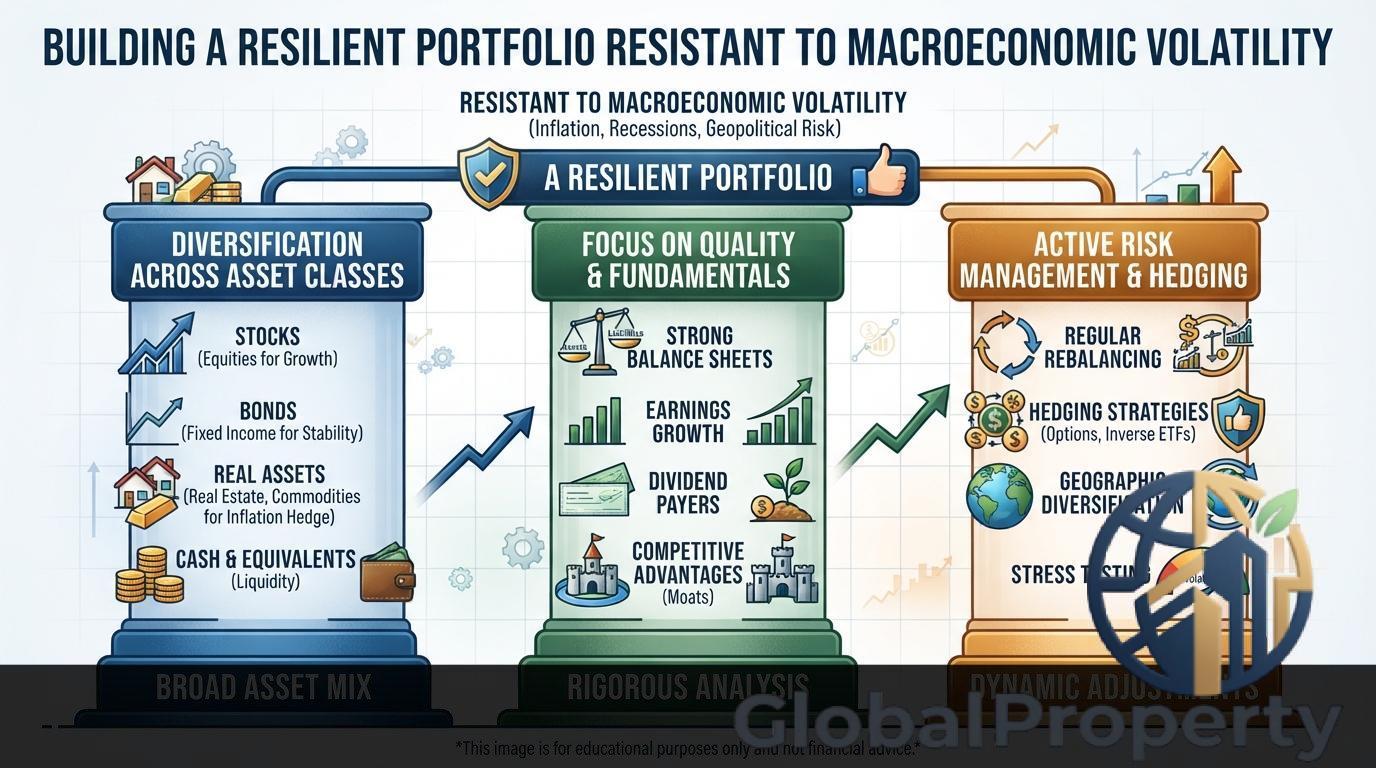
Diversification in portfolio management is a fundamental strategy that aims to spread risk across various asset classes to minimize the impact of market volatility. By investing in a mix of assets such as stocks, bonds, real estate, and commodities, investors can reduce the overall risk exposure of their portfolios. When one asset class underperforms, others may perform better, helping to balance out losses and potentially enhance returns.
Moreover, diversification can help protect against unforeseen events and economic downturns that may disproportionately affect certain industries or sectors. By spreading investments across different types of assets with varying correlations, investors can create a more resilient portfolio that is better positioned to weather market fluctuations and uncertainties over the long term.
Strategies for Building a Resilient Portfolio
Building a resilient portfolio involves implementing a combination of strategies that focus on risk management, diversification, and long-term goals. Investors can employ techniques such as asset allocation, rebalancing, and incorporating alternative investments to enhance portfolio resilience. It is essential to regularly review and adjust the portfolio to ensure it aligns with the investor’s risk tolerance and investment objectives.
Additionally, maintaining a long-term perspective and avoiding reactionary decisions during market downturns can help investors stay disciplined and avoid emotional investing pitfalls. By diversifying across asset classes and geographies, investors can reduce the impact of market volatility on their overall portfolio performance and increase the likelihood of achieving their financial goals.
Strategies for Building a Resilient Portfolio
Building a resilient portfolio is crucial in the face of macroeconomic volatility. One key strategy is diversification, which involves spreading investments across different asset classes to reduce risk exposure. By investing in a mix of stocks, bonds, real estate, and commodities, investors can mitigate the impact of market fluctuations on their overall portfolio performance. Another effective strategy is asset allocation, where investors strategically divide their assets based on their risk tolerance, investment goals, and time horizon. This helps balance the portfolio and optimize returns in varying market conditions.
Furthermore, active risk management is essential for navigating macroeconomic uncertainty. This involves continually monitoring and adjusting the portfolio to respond to changing market conditions. Implementing hedging strategies, setting stop-loss orders, and regularly rebalancing the portfolio are key tactics to manage risk effectively. By adopting these strategies, investors can enhance the resilience of their portfolio and position themselves for long-term financial success.
Asset Allocation Models for Volatile Markets
Asset allocation is a critical component of portfolio management, especially in volatile markets. The goal of asset allocation is to distribute investments across different asset classes, such as stocks, bonds, real estate, and commodities, in a way that maximizes returns while minimizing risk. In volatile markets, having a well-diversified portfolio can help cushion the impact of market fluctuations on overall performance.
Modern portfolio theory suggests that investors can optimize their risk-return profile by allocating assets based on their risk tolerance and investment objectives. Some common asset allocation models include strategic asset allocation, tactical asset allocation, and dynamic asset allocation. These models involve periodically rebalancing the portfolio to maintain the desired asset mix and adjust to changing market conditions. By implementing a robust asset allocation strategy, investors can better navigate through turbulent market environments and improve the resilience of their portfolios.
Risk Management Techniques for Macroeconomic Uncertainty
Risk management is crucial for investors looking to protect their portfolios from the impact of macroeconomic uncertainty. In volatile markets, it is essential to implement risk management techniques to mitigate potential losses and preserve capital. One common risk management technique is diversification, which involves spreading investments across different asset classes and sectors to reduce exposure to any single risk factor.
Other risk management strategies include setting stop-loss orders, using options and derivatives for hedging, and employing asset-liability matching to match investments with liabilities. Additionally, actively monitoring and analyzing macroeconomic trends and indicators can help investors anticipate potential risks and adjust their portfolios accordingly. By incorporating effective risk management techniques, investors can better navigate through uncertain times and protect their wealth in volatile market conditions.
Asset Allocation Models for Volatile Markets
Asset allocation is a crucial component of portfolio management, especially in volatile markets. In times of uncertainty and fluctuating markets, the right mix of asset classes can help investors mitigate risk and achieve their financial goals. Different asset allocation models exist, such as strategic asset allocation, tactical asset allocation, and dynamic asset allocation. Each model has its own approach to balancing risk and return based on market conditions and investor objectives.
Strategic asset allocation involves setting a long-term target allocation and periodically rebalancing the portfolio to maintain that allocation. Tactical asset allocation, on the other hand, involves actively adjusting asset allocations based on short-term market conditions. Dynamic asset allocation combines elements of both strategies, allowing for flexibility in response to changing market dynamics. By understanding these asset allocation models and implementing them effectively, investors can better navigate volatile markets and optimize their investment returns.
Risk Management Techniques for Macroeconomic Uncertainty
Risk management is essential for investors looking to protect their portfolios from the impact of macroeconomic uncertainty. Various techniques can help investors identify, assess, and mitigate risks in their investment strategies. Diversification, hedging, and asset allocation are common risk management techniques used to minimize the impact of market volatility and economic instability.
Diversification involves spreading investments across different asset classes, industries, and regions to reduce the overall risk exposure of a portfolio. Hedging involves using financial instruments like options and futures to offset potential losses in specific asset holdings. Additionally, asset allocation plays a key role in risk management by determining the mix of assets that align with an investor’s risk tolerance and investment objectives. By incorporating these risk management techniques into their investment approach, investors can better navigate macroeconomic uncertainty and protect their portfolios from unforeseen events.
Conclusion
In conclusion, navigating through macroeconomic volatility requires a deep understanding of the factors at play and a strategic approach to portfolio management. Diversification, resilience-building strategies, asset allocation models, and risk management techniques are all crucial components in weathering uncertain market conditions. By adopting a proactive and well-rounded approach to portfolio management, investors can position themselves for success even in the face of macroeconomic challenges. It is essential to stay informed, adapt quickly to changing circumstances, and continually reassess and adjust portfolio strategies to align with the evolving market landscape. Ultimately, a well-diversified and resilient portfolio, combined with effective risk management practices, can help investors not only survive but thrive in volatile macroeconomic environments.