
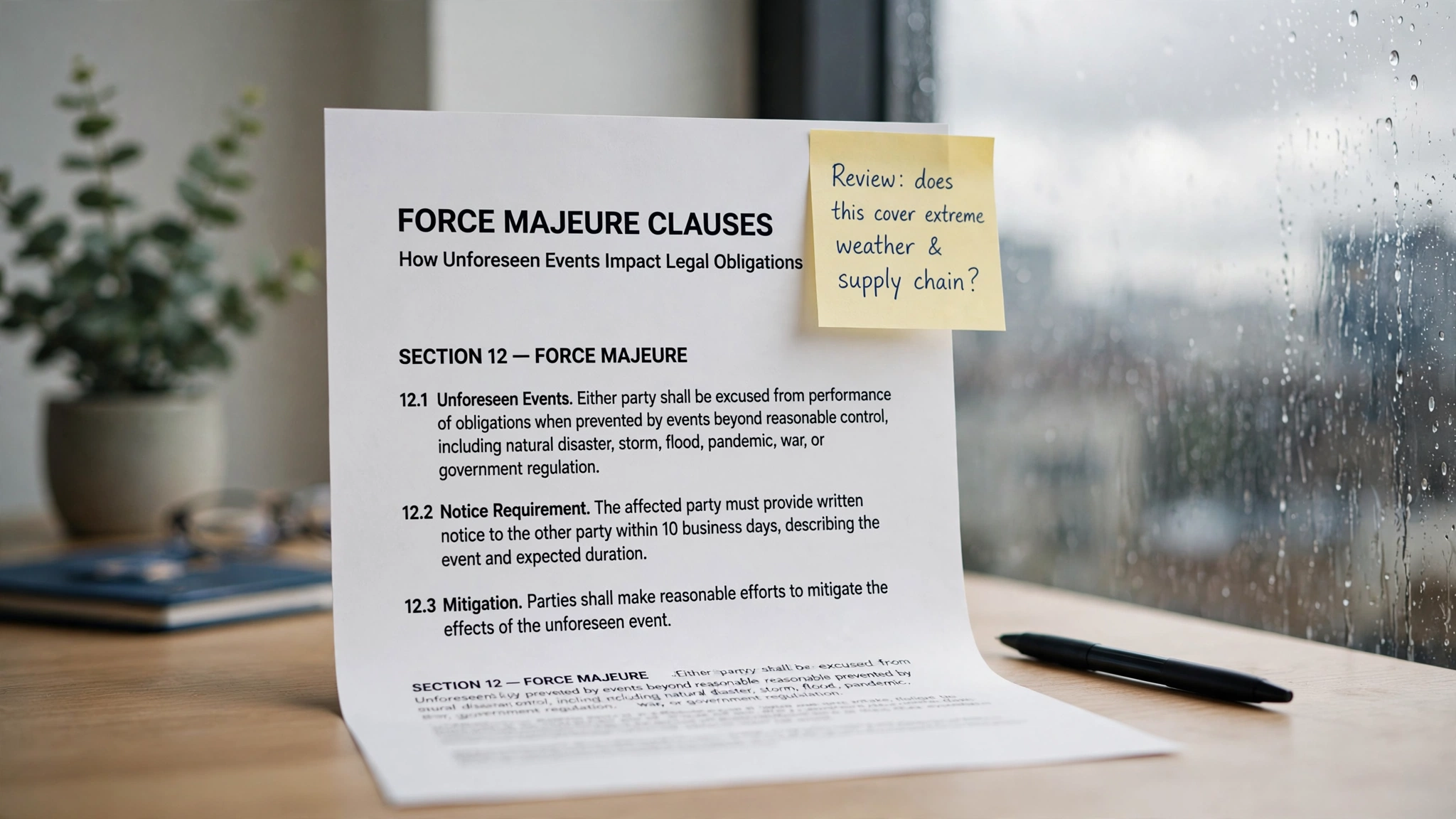
Are you familiar with the legal jargon that can significantly impact your business contracts? One such crucial element is the force majeure clause, a provision that comes into play when unforeseen events disrupt contractual obligations. Picture this: you’ve diligently crafted a contract, only to have it upended by a global pandemic, natural disaster, or other unforeseen circumstances. What happens then? How do these unexpected events affect your legal responsibilities and liabilities? Understanding force majeure clauses is essential in navigating the complex terrain of legal obligations during times of crisis.
Now, imagine the frustration of being caught off-guard by a force majeure event without a clear understanding of its implications. The repercussions can be severe – financial losses, breached contracts, and potential legal disputes loom ominously. Without a solid grasp of force majeure clauses and their nuances, you might find yourself in a legal quagmire, facing uncertainties and risks that could have been mitigated with proper foresight and preparation. The stakes are high, and the consequences of overlooking this critical aspect of contract law can be dire.
But fear not, for knowledge is power, and in the realm of force majeure clauses, understanding is key. By delving into the intricacies of how unforeseen events can impact legal obligations, you equip yourself with the tools to navigate turbulent waters with confidence and clarity. Stay tuned as we unravel the complexities of force majeure clauses, shedding light on their implications and providing you with the insights you need to safeguard your business interests effectively. Let’s embark on this enlightening journey together, empowering you to face legal challenges head-on and emerge stronger and more resilient in the face of uncertainty.
Definition of Force Majeure
Force majeure refers to unforeseeable circumstances that prevent parties from fulfilling their contractual obligations. These events are typically beyond the control of the parties involved and may include natural disasters, war, strikes, or government actions. Force majeure clauses are included in contracts to provide a legal framework for how such events should be handled.
Importance of Force Majeure Clauses
Force majeure clauses are crucial in contracts as they help mitigate risks associated with unforeseen events. By clearly defining what constitutes a force majeure event and outlining the consequences, these clauses provide certainty and protection for both parties. Without a well-drafted force majeure clause, parties may face legal uncertainties and potential disputes in case of disruptions beyond their control.
Importance of Force Majeure Clauses
Force majeure clauses play a crucial role in contracts by providing parties with protection in unforeseen circumstances that may affect their ability to fulfill their obligations. These clauses typically outline specific events or circumstances that would excuse a party from performance, such as natural disasters, wars, or government actions beyond their control. By including a force majeure clause in a contract, parties can mitigate risks and uncertainties associated with unpredictable events.
Moreover, force majeure clauses help establish clarity and certainty in contractual relationships. They define the scope of events that would trigger the clause, specify the obligations of the parties in such situations, and outline the procedures for invoking the clause. This clarity can prevent disputes and litigation by providing a predetermined mechanism for addressing unforeseen events, ultimately contributing to the stability and enforceability of contracts.
Introduction
When navigating the complex landscape of legal agreements, understanding the concept of Force Majeure is crucial. This term has gained significant attention in recent times due to unforeseen global events that have disrupted businesses and contractual obligations. In this article, we will delve into the definition, importance, case studies, legal interpretations, and impacts of Force Majeure clauses in contracts.
Definition of Force Majeure
Force Majeure refers to unforeseeable circumstances that prevent parties from fulfilling their contractual obligations. These events are typically beyond the control of the involved parties and can include natural disasters, wars, pandemics, or governmental actions. Understanding the specific language and scope of Force Majeure clauses in contracts is essential for determining the rights and responsibilities of each party when such events occur.
Importance of Force Majeure Clauses
The inclusion of Force Majeure clauses in contracts serves as a safeguard for parties against unforeseen events that could disrupt the performance of their obligations. These clauses outline the conditions under which contractual obligations may be excused or delayed due to Force Majeure events. By clearly defining and negotiating these clauses, parties can mitigate risks and uncertainties in their contractual relationships.
Case Studies on Force Majeure Events
Examining case studies of Force Majeure events provides valuable insights into how different industries and businesses have been impacted by unforeseen circumstances. From supply chain disruptions to event cancellations, real-world examples illustrate the practical implications of Force Majeure clauses in mitigating risks and allocating responsibilities in times of crisis.
Case Studies on Force Majeure Events
Examining real-world examples of force majeure events provides valuable insights into how these clauses operate in practice. One notable case study involves a global pandemic that disrupted supply chains, leading to delays in fulfilling contractual obligations. Companies facing such unforeseen circumstances may invoke force majeure clauses to seek relief from performance obligations.
Another case study could revolve around natural disasters like hurricanes or earthquakes, which can render contracts impossible to perform. Understanding how courts have interpreted force majeure clauses in these scenarios can help parties anticipate the potential impact of such events on their contractual relationships.
Legal Interpretations of Force Majeure Clauses
The legal interpretation of force majeure clauses is crucial in determining their applicability in specific situations. Courts typically analyze the language of the clause, the nature of the event, and the impact on the party seeking relief. In some jurisdictions, force majeure clauses are narrowly construed, requiring events to meet strict criteria to qualify.
Moreover, legal precedents play a significant role in shaping how force majeure clauses are interpreted over time. Understanding the legal nuances surrounding force majeure can help parties to draft more robust and enforceable clauses in their contracts, thereby mitigating risks associated with unforeseen events.
Impact of Force Majeure on Contracts
Understanding the impact of force majeure on contracts is crucial for businesses to navigate unexpected events smoothly. When a force majeure clause is triggered, it can provide parties with relief from contractual obligations due to unforeseen circumstances beyond their control. This clause typically outlines specific events that qualify as force majeure, such as natural disasters, wars, or pandemics, and the procedures to follow when such events occur.
Contracts may be temporarily suspended or terminated when force majeure events occur, allowing parties to renegotiate terms or seek alternative solutions. It is essential for businesses to carefully draft force majeure clauses to clearly define the scope of events covered and the actions to be taken in case of activation. Effective communication and understanding between parties are key to minimizing disputes and ensuring the smooth operation of contracts during force majeure situations.
Impact of Force Majeure on Contracts
In legal terms, force majeure events are unpredictable circumstances that can render contract performance impossible or impracticable. When such events occur, parties may seek to invoke force majeure clauses within their contracts to provide relief from their obligations. The impact of force majeure on contracts can vary depending on the specific wording of these clauses, as they define what constitutes a force majeure event and outline the consequences for non-performance.
Contractual Obligations and Force Majeure
Contracts typically outline the responsibilities and duties of each party involved. In the presence of a force majeure event, these obligations may be temporarily or permanently excused, depending on the severity and duration of the event. Understanding the implications of force majeure clauses within contracts is crucial for parties to navigate unforeseen circumstances and mitigate potential legal disputes.