
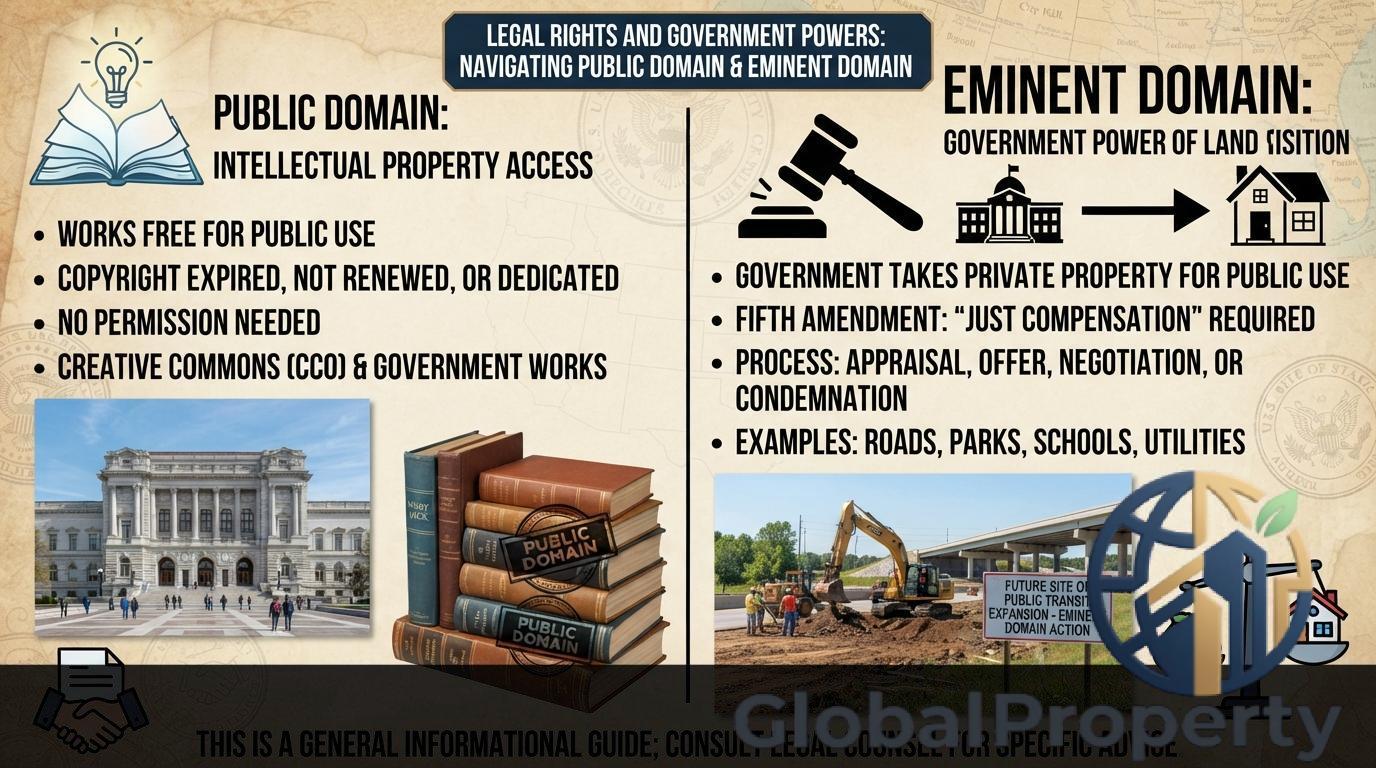
Are you aware of the intricate legal concepts surrounding public domain and eminent domain? If not, navigating these terms can be a daunting task, leaving many individuals perplexed and unsure of their rights. Public domain refers to the realm of intellectual property that is not owned or controlled by anyone, while eminent domain empowers the government to seize private property for public use. Understanding the distinctions between these two domains is crucial for protecting your rights and property.
Imagine the frustration of waking up one day to find out that your property is being targeted for acquisition under eminent domain, with little knowledge about your rights or how to challenge the government’s actions. The consequences of not being well-versed in these legal matters can be dire, potentially leading to the loss of your property without fair compensation or legal recourse. The lack of awareness and preparedness in such situations can leave individuals feeling powerless and vulnerable in the face of government authority.
But fear not, there is a solution to demystify the complexities of public domain and eminent domain. By gaining a solid understanding of these legal concepts, you can safeguard your property rights and navigate any potential disputes with confidence. Empowering yourself with knowledge about public and eminent domain laws is the key to ensuring that your rights are protected and respected in the face of government actions. Join us on this enlightening journey as we delve deep into the realms of legal rights and government powers, equipping you with the tools to navigate these complex landscapes with ease and assurance.
Understanding Domain Rights
Domain rights refer to the legal rights and ownership associated with a particular domain name on the internet. When an individual or organization registers a domain name, they are essentially claiming exclusive rights to use that specific web address for their online presence. Domain rights are crucial for establishing a unique identity and branding in the digital space. It is essential for businesses to protect their domain rights to prevent unauthorized use or infringement by others. Furthermore, understanding domain rights involves knowledge of domain registration procedures, renewal requirements, and potential disputes that may arise over ownership.
Legal Implications of Public Domain
The public domain consists of creative works and intellectual property that are not protected by copyright or any other legal restrictions. Understanding the legal implications of the public domain is essential for creators, scholars, and users of intellectual property. Works in the public domain can be freely used, shared, and adapted without permission, as they are considered part of the common cultural heritage. However, it is crucial to distinguish between works in the public domain and those still under copyright protection to avoid infringement issues. Additionally, the concept of public domain varies across jurisdictions, so it is important to be aware of the specific laws and regulations governing intellectual property rights in different regions.
Public Domain Explained
The concept of public domain refers to creative works that are not protected by intellectual property rights and are available for anyone to use freely. These works can include literary works, music, art, and more that have either expired copyrights or were never eligible for copyright protection. Public domain works can be used without permission or payment, allowing for greater access and creativity in the public domain.
It is important to note that the rules around public domain can vary by country, so it is essential to understand the specific laws and regulations that apply. By utilizing public domain works, individuals and organizations can benefit from a wealth of creative content without the restrictions of copyright law, fostering innovation and cultural exchange.
Understanding Domain Rights
Domain rights refer to the legal ownership and control of a specific internet domain name. When individuals or organizations register a domain name, they are granted certain rights to use that domain for their website or online presence. Understanding domain rights involves knowing the responsibilities that come with ownership, such as renewing registration, maintaining accurate contact information, and complying with domain registration regulations.
Domain rights can also include the ability to transfer ownership of a domain, protect against domain hijacking, and resolve disputes through domain arbitration processes. It is crucial for website owners to be aware of their domain rights to protect their online presence and maintain control over their digital identity.

Public Domain Explained
Public domain refers to creative works or intellectual property that are not protected by copyright law and are thus available for anyone to use freely. This can include works where the copyright has expired, been forfeited, or where the creator has explicitly waived their rights. Examples of public domain material include old literature, classical music, and government publications. The main advantage of utilizing public domain content is that it can be used without any restrictions, allowing for greater creativity and innovation.
It’s important to note that the status of public domain works can vary by country, so it’s crucial to understand the specific legal frameworks in place. Additionally, while public domain works can be used freely, it’s essential to respect any moral rights associated with the work, such as attributing the original creator if applicable.
Eminent Domain Overview
Eminent domain is a legal concept that grants governments the power to expropriate private property for public use, provided that the property owner is justly compensated. This authority is typically used for infrastructure projects like roads, schools, or public utilities. Eminent domain is based on the principle that the government has a duty to promote the welfare of the public, even if it requires taking private property.
While eminent domain is a necessary tool for urban development and public welfare, it can be a contentious issue when property owners feel their rights are being infringed upon. Legal safeguards are in place to ensure that property owners are fairly compensated for their land, and that the government’s use of eminent domain is justified and in the public interest.
Legal Implications of Public Domain
Public domain refers to intellectual property that is not protected by copyright law and is available for anyone to use freely. However, it is crucial to understand the legal implications of utilizing public domain material. While public domain works can be used without permission, it is essential to ensure that they are truly in the public domain and not mistakenly copyrighted. Using copyrighted material under the assumption that it is in the public domain can lead to legal consequences, including copyright infringement lawsuits.
It is important for individuals and businesses to conduct thorough research and due diligence before using public domain materials to prevent any legal issues. Additionally, proper attribution and compliance with any applicable laws or regulations are essential when using public domain works. Understanding the legal implications of public domain content is key to avoiding potential legal disputes and ensuring that intellectual property rights are respected.
Government Powers in Eminent Domain
Eminent domain is a legal concept that grants governments the power to take private property for public use, provided that just compensation is paid to the property owner. Understanding the government’s powers in eminent domain is crucial for both property owners and government entities. Governments may use eminent domain for various public purposes, such as building infrastructure, public facilities, or urban development projects.
Property owners impacted by eminent domain actions have legal rights, including the right to challenge the government’s taking of their property and the right to fair compensation. It is essential for property owners to be aware of their legal rights and options when faced with an eminent domain situation. Governments must follow proper procedures and provide just compensation when exercising eminent domain powers to ensure fairness and protect property rights.
6. Government Powers in Eminent Domain
Government Powers in Eminent Domain: Eminent domain refers to the authority of a government to seize private property for public use, with just compensation to the property owner. This power is typically exercised by government entities at the federal, state, and local levels for projects like infrastructure development, public utilities, and urban renewal. The government’s power in eminent domain is derived from the Fifth Amendment of the U.S. Constitution, which states that private property cannot be taken for public use without just compensation.
Process and Limitations: When the government exercises eminent domain, it must follow a legal process that includes providing notice to the property owner, conducting appraisals, and offering fair compensation. However, there are limitations to this power, such as the requirement that the taking of property must be for a public purpose and that the compensation offered must be just. Property owners have the right to challenge the government’s decision through legal means to ensure that their rights are protected in the eminent domain process.
Government Powers in Eminent Domain
Eminent domain is a legal concept that grants the government the authority to expropriate private property for public use, with compensation to the property owner. This power is typically exercised by governments at various levels to facilitate infrastructure projects such as roads, schools, or public utilities. The process of eminent domain involves a complex legal framework that balances the rights of property owners with the broader public interest.
Government powers in eminent domain are not unlimited, and property owners have the right to challenge the government’s decision through legal means. Understanding the scope and limitations of eminent domain is crucial for both property owners and government entities to ensure a fair and just process. By navigating the legal intricacies of eminent domain, stakeholders can work towards mutually beneficial outcomes that serve the community’s needs while respecting individual property rights.