
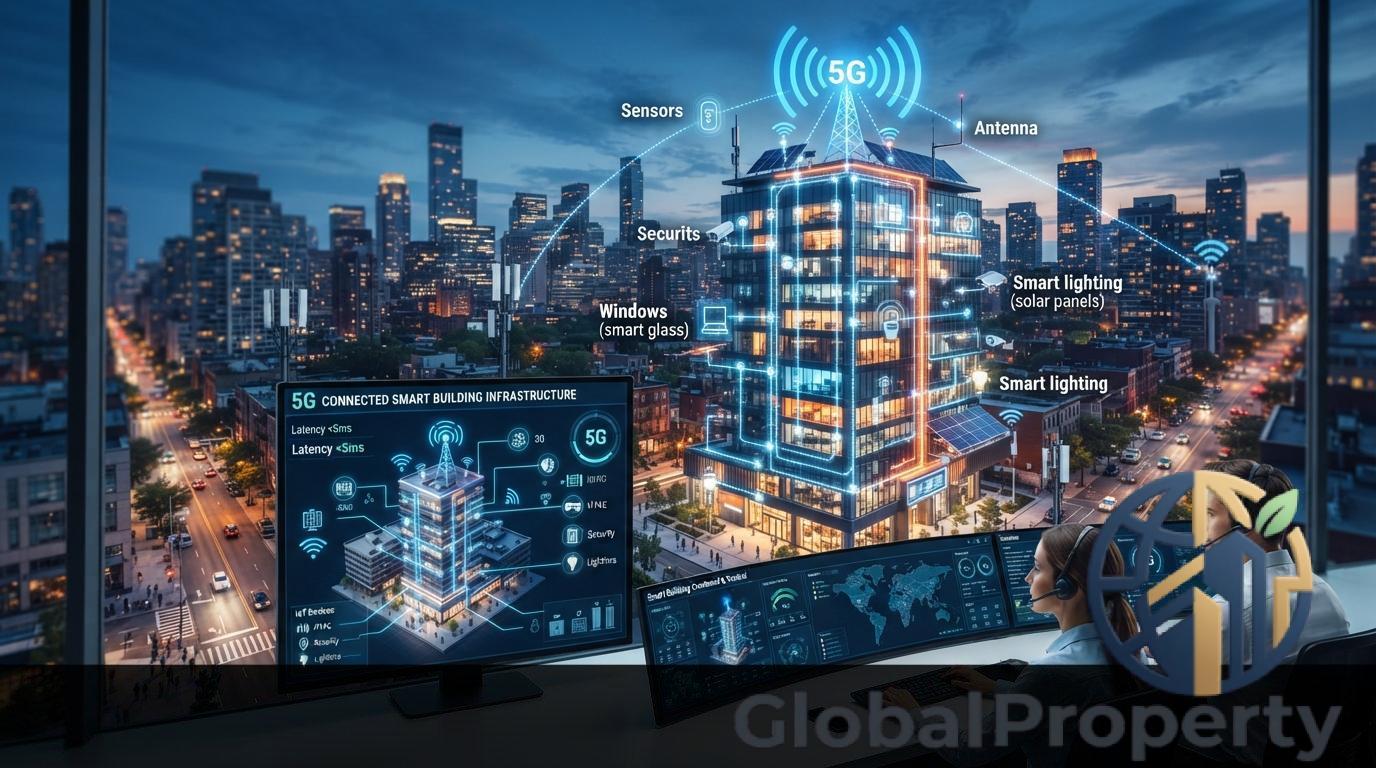
Are you tired of dealing with slow and unreliable internet connections in your smart building? Imagine a world where your devices can communicate seamlessly and instantaneously, where data flows effortlessly, and where efficiency and innovation thrive. The problem we face today lies in the limitations of our current connectivity infrastructure to support the demands of modern smart buildings. This is where the revolutionary impact of 5G connectivity comes into play.
Picture this: you’re in a smart building, trying to access critical data or control essential systems, only to be met with frustrating lag times and connectivity issues. The inefficiencies not only hinder productivity but also pose potential risks to the safety and security of the building occupants. This struggle highlights the urgent need for a reliable and high-speed communication network that can keep up with the dynamic nature of smart buildings.
Enter 5G connectivity – the game-changer that promises to revolutionize smart building infrastructure as we know it. With its lightning-fast speeds, ultra-low latency, and massive capacity, 5G has the power to transform how smart buildings operate, enabling real-time data processing, seamless automation, and enhanced user experiences. Imagine a future where your smart building responds instantaneously to your commands, anticipates your needs, and operates with unparalleled efficiency. The era of 5G connectivity is here, and it’s poised to redefine the capabilities of smart buildings in ways we’ve never imagined. Get ready to unlock the full potential of your smart building with the transformative power of 5G connectivity.
Understanding 5G Technology
5G technology is the latest generation of mobile internet connectivity, offering faster speeds and more reliable connections on smartphones and other devices than ever before. It operates on three different frequency bands – low, mid, and high bands – each serving a unique purpose in delivering high-speed data with minimal latency. With speeds potentially reaching up to 20 gigabits per second, 5G is a game-changer for various industries, including smart buildings.
One of the key features of 5G technology is its ability to support a massive number of devices simultaneously, making it ideal for the Internet of Things (IoT) applications in smart buildings. This technology enables seamless integration of various smart devices, sensors, and systems within a building, paving the way for enhanced automation, energy efficiency, and overall building management.
Benefits of 5G Connectivity in Smart Buildings
5G connectivity brings a plethora of benefits to smart buildings, revolutionizing the way these structures are designed, constructed, and managed. With its ultra-fast speeds and low latency, 5G enables real-time monitoring and control of building systems, such as lighting, HVAC, security, and more. This results in improved operational efficiency, cost savings, and enhanced occupant experience.
Furthermore, 5G connectivity facilitates the implementation of advanced technologies like augmented reality (AR) and virtual reality (VR) in smart buildings, offering immersive experiences for occupants and visitors. The high bandwidth and low latency of 5G also support the deployment of autonomous systems, such as drones and robots, for various tasks within smart buildings, further enhancing productivity and safety.
Smart Building Infrastructure Basics
Smart building infrastructure refers to the integrated technology systems within a building that enable automation, control, and optimization of various functions such as lighting, HVAC, security, and energy management. These systems typically consist of sensors, actuators, and communication networks that collect and transmit data to centralized control systems for analysis and decision-making. The goal of smart building infrastructure is to enhance efficiency, comfort, and sustainability while reducing operational costs and environmental impact.
Benefits of 5G Connectivity in Smart Buildings
5G connectivity in smart buildings offers numerous advantages, including ultra-fast data speeds, low latency, and high network capacity. This enables real-time monitoring and control of building systems, leading to improved energy efficiency, enhanced security, and better occupant comfort. With 5G, smart buildings can leverage advanced technologies like IoT devices, artificial intelligence, and augmented reality to create more personalized and responsive environments. Additionally, 5G connectivity paves the way for new services and applications that can transform the way buildings are designed, operated, and experienced.

Benefits of 5G Connectivity in Smart Buildings
5G technology is revolutionizing the way smart buildings operate and interact with the surrounding environment. The high-speed, low-latency connectivity offered by 5G networks enables a wide range of applications within smart buildings, including real-time monitoring, energy management, security systems, and more. With 5G, smart buildings can optimize resource utilization, enhance occupant comfort, and improve overall operational efficiency. By leveraging the power of 5G connectivity, smart buildings can become more responsive, adaptive, and sustainable, leading to a better quality of life for occupants and a more cost-effective operation for building owners.
Challenges and Limitations
Despite the numerous benefits of 5G connectivity in smart buildings, there are also challenges and limitations that need to be addressed. One significant challenge is the cost associated with upgrading existing infrastructure to support 5G technology. Additionally, ensuring security and privacy in a highly connected environment poses a constant challenge for smart building operators. Interoperability issues between different devices and systems can also hinder the seamless integration of 5G technology within smart buildings. Addressing these challenges and limitations will be crucial in realizing the full potential of 5G connectivity in smart buildings.
Challenges and Limitations
5G technology in smart buildings comes with its own set of challenges and limitations that need to be addressed for successful implementation. One major challenge is the high initial cost associated with upgrading existing infrastructure to support 5G connectivity. Building owners and managers may face significant expenses in installing new equipment and ensuring compatibility with 5G networks. Additionally, the complexity of managing multiple devices and systems within smart buildings can pose integration challenges, leading to potential downtime and security risks. Moreover, the increased data traffic generated by 5G-enabled devices can strain network resources, requiring robust bandwidth management solutions to maintain optimal performance.
Case Studies of 5G-Enabled Smart Buildings
Examining real-world examples of 5G-enabled smart buildings can provide valuable insights into the practical applications and benefits of this technology. Case studies showcase how organizations have leveraged 5G connectivity to enhance building automation, energy efficiency, and occupant experience. For instance, a smart office building equipped with 5G infrastructure may feature seamless connectivity for IoT devices, real-time data analytics for efficient resource management, and advanced security systems for enhanced safety. By exploring successful implementations of 5G technology in smart buildings, stakeholders can gain inspiration and guidance for their own projects, driving innovation and sustainability in the built environment.
Case Studies of 5G-Enabled Smart Buildings
5G technology has revolutionized the way smart buildings operate, offering unprecedented connectivity and efficiency. Let’s delve into some real-world case studies showcasing the successful integration of 5G in smart building infrastructure.
Case Study 1: Smart Office Building in New York
In the heart of New York City, a cutting-edge office building implemented 5G connectivity to enhance its smart features. By leveraging the high-speed and low-latency capabilities of 5G, the building optimized energy consumption, improved security systems, and enabled seamless communication among IoT devices. This resulted in a more productive and sustainable work environment for tenants.
Case Study 2: Smart Residential Complex in Singapore
A luxury residential complex in Singapore adopted 5G technology to transform into a smart living space. Residents now enjoy ultra-fast internet speeds, integrated smart home controls, and advanced safety protocols powered by 5G networks. The implementation of 5G has not only elevated the quality of life for residents but also reduced operational costs for the building management.
Future Trends and Implications
The future of smart buildings looks promising with the integration of 5G technology. As we move forward, we can expect to see a significant rise in the number of smart buildings leveraging the power of 5G connectivity. This advancement will revolutionize the way buildings are designed, constructed, and managed. With faster speeds, lower latency, and increased capacity, 5G will enable a wide array of innovative applications and services within smart buildings.
Furthermore, the implications of 5G in smart buildings go beyond just convenience and efficiency. It will pave the way for enhanced sustainability, improved safety and security features, and better overall user experience. As more buildings become interconnected and smarter, we can anticipate a shift towards a more connected and automated environment where buildings can adapt to the needs of their occupants in real-time. The future of 5G-enabled smart buildings is bright, promising a more intelligent and responsive built environment.