
Are you tired of spending countless hours analyzing potential real estate investments only to feel overwhelmed by complex financial calculations? Do you find yourself struggling to quickly assess the profitability of a property before diving deep into the details? If this sounds familiar, then you’re not alone. Many real estate investors face the challenge of efficiently screening properties to identify lucrative opportunities. The key lies in finding a simple yet effective tool that can provide valuable insights at a glance. Enter Gross Rent Multipliers (GRM) – a game-changer in the world of property screening.
Picture this: you come across a promising property listing, but you’re unsure if it’s worth your time and resources. Without a reliable screening method, you risk wasting precious time on properties that may not yield the desired returns. The frustration of not having a quick and efficient way to evaluate the income potential of a property can lead to missed opportunities and financial setbacks. This uncertainty can hold you back from making confident investment decisions and growing your real estate portfolio.
But fear not, there’s a solution that can revolutionize your property screening process and provide you with the clarity and confidence you need. Gross Rent Multipliers (GRM) offer a straightforward way to assess the income-generating potential of a property by comparing its purchase price to its rental income. By understanding and utilizing GRM effectively, you can quickly filter out properties that don’t meet your investment criteria and focus your efforts on those that offer the best returns. Get ready to supercharge your property screening process and unlock the secrets to profitable real estate investments with GRM.
Benefits of Using GRM for Property Investment Analysis
Gross Rent Multiplier (GRM) is a valuable tool for real estate investors looking to analyze potential properties for investment. One of the key benefits of using GRM is its simplicity and ease of calculation. By dividing the property’s purchase price by its gross rental income, investors can quickly determine whether a property is a good investment opportunity. This allows investors to compare different properties based on their income-generating potential without getting bogged down in complex calculations.
Another benefit of using GRM is its ability to provide a quick snapshot of a property’s potential return on investment. By comparing the GRM of different properties in a particular market, investors can identify undervalued properties that may offer a higher return compared to similar properties. This can help investors make more informed decisions when selecting properties for their investment portfolio, ultimately maximizing their returns in the long run.
Benefits of Using GRM for Property Investment Analysis
Gross Rent Multiplier (GRM) is a valuable tool for real estate investors to quickly assess the potential profitability of a rental property. By calculating the GRM, investors can determine how many years it would take for the property’s rental income to equal its purchase price. This metric provides a simple way to compare different properties and make informed investment decisions.
Using GRM for property investment analysis offers several benefits. It allows investors to evaluate the income-generating potential of a property relative to its cost. By comparing the GRM of similar properties in a market, investors can identify opportunities for higher returns or potential risks. Additionally, GRM can help investors estimate the property’s value based on its rental income, providing insights into potential cash flow and return on investment.
Common Mistakes to Avoid When Using GRM
While calculating Gross Rent Multiplier (GRM) can be a powerful tool for property analysis, there are common mistakes that investors should avoid to make accurate assessments. One common mistake is relying solely on GRM to make investment decisions without considering other factors such as operating expenses, property condition, and market trends.
Another mistake is using outdated or inaccurate rental income figures when calculating GRM, leading to inaccurate evaluations of a property’s potential. It’s essential to ensure that the rental income used in the calculation reflects the current market conditions. Additionally, overlooking variations in expenses or failing to account for vacancy rates can skew the GRM calculation and impact the accuracy of investment analysis.

Calculating GRM: Step-by-Step Guide
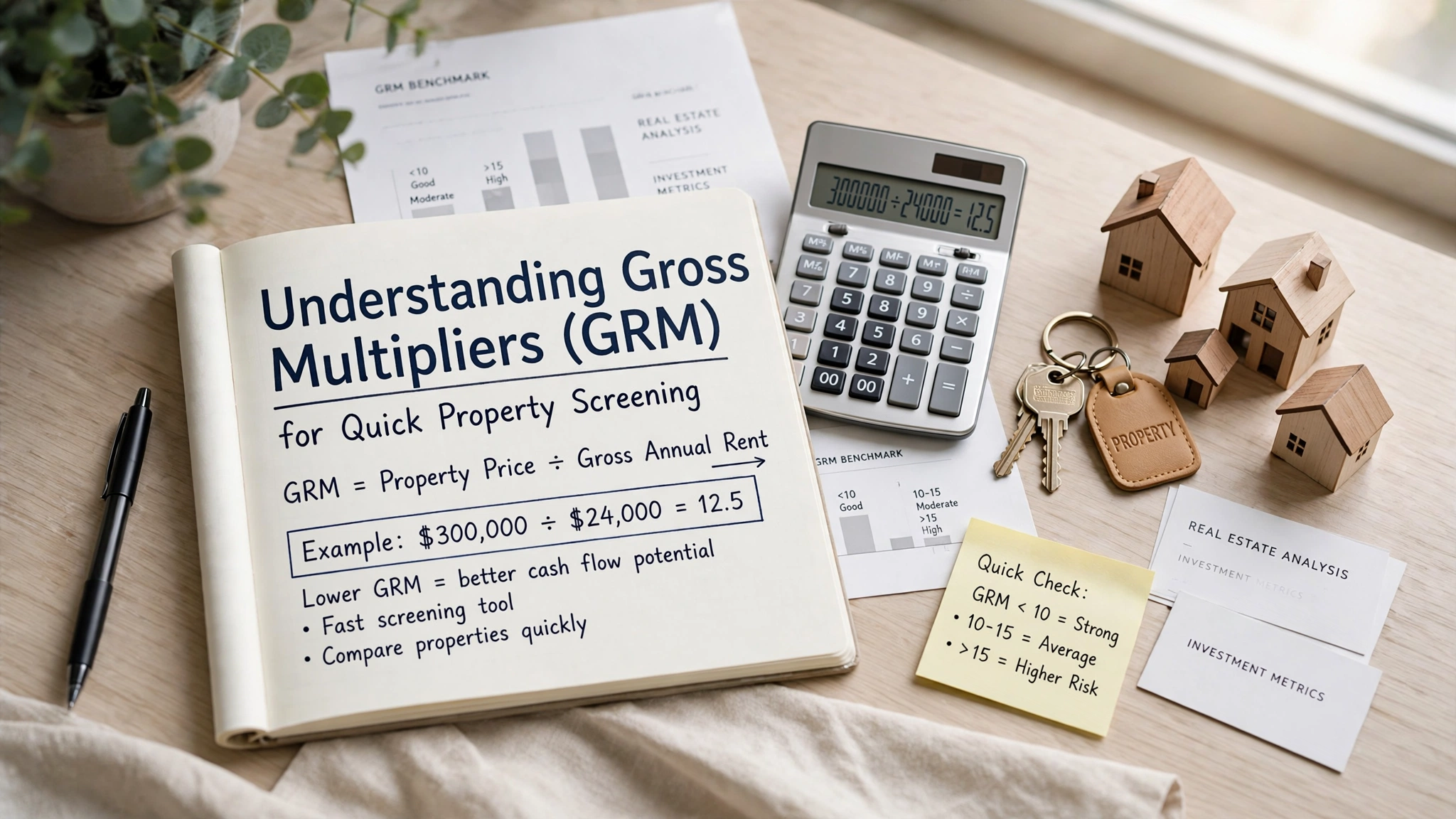
Gross Rent Multiplier (GRM) is a crucial metric in real estate investing that helps investors determine the value of a rental property based on its rental income. Calculating GRM involves a simple formula: dividing the property’s purchase price by its gross annual rental income. This ratio provides insight into how many years it would take for the property’s rental income to equal its purchase price.
To calculate GRM: 1. Determine the property’s purchase price. 2. Calculate the property’s gross annual rental income. 3. Divide the purchase price by the annual rental income to get the GRM. For example, if a property costs $500,000 and generates $50,000 in annual rental income, the GRM would be 10. This means it would take 10 years for the rental income to equal the property’s purchase price.
Importance of GRM in Real Estate Investing
Gross Rent Multiplier (GRM) plays a vital role in real estate investing by providing a quick and efficient way to evaluate the income potential of a rental property. Investors use GRM to compare different properties and make informed decisions based on their investment goals and risk tolerance. A lower GRM indicates a potentially higher return on investment, while a higher GRM may suggest a longer payback period.
Understanding the importance of GRM helps investors assess the profitability and value of rental properties, enabling them to make strategic investment choices. By incorporating GRM into their property analysis, investors can gain valuable insights into rental property performance and make more informed decisions to maximize their returns in the real estate market.
Importance of GRM in Real Estate Investing
Gross Rent Multiplier (GRM) is a crucial metric in real estate investing that helps investors evaluate the potential profitability of a rental property. By calculating the GRM, investors can quickly assess the property’s value relative to its rental income. A lower GRM indicates a potentially better investment opportunity, as it suggests that the property’s value is lower in relation to its rental income.
Understanding the importance of GRM can help investors make informed decisions when considering different properties for investment. By comparing GRM values across properties, investors can identify those that offer the best potential returns and avoid properties that may not be as profitable.
Using GRM to Evaluate Rental Property Performance
Utilizing the Gross Rent Multiplier (GRM) is an effective way to evaluate the performance of rental properties. By calculating the GRM, investors can determine how many years it would take to recoup the property’s purchase price based on its rental income. This information can help investors assess the property’s potential for generating cash flow and profitability.
Additionally, using GRM to evaluate rental property performance allows investors to compare different properties and make data-driven investment decisions. By analyzing the GRM of various properties, investors can identify opportunities to maximize their returns and build a successful real estate investment portfolio.
Using GRM to Evaluate Rental Property Performance
Gross Rent Multiplier (GRM) is a valuable tool for real estate investors to assess the performance of rental properties. By calculating the GRM, investors can quickly determine the property’s value based on its rental income. This metric is calculated by dividing the property’s purchase price by its annual gross rental income. A lower GRM typically indicates a better investment opportunity, as it means the property is generating more income relative to its price.
Investors can use the GRM to compare different properties and identify which one offers the best return on investment. By analyzing the GRM of various properties, investors can make informed decisions about where to allocate their capital for maximum profitability. Additionally, monitoring changes in the GRM over time can help investors track the performance of their rental properties and make adjustments to their investment strategies as needed.
Factors Affecting GRM in Different Real Estate Markets
Several factors can impact the Gross Rent Multiplier (GRM) in different real estate markets. Location plays a significant role in determining the GRM, as properties in high-demand areas with limited supply tend to have lower GRMs due to higher rental income relative to their purchase price. Economic conditions, such as job growth and population trends, can also influence the GRM by affecting rental demand and property values.
Other factors that can affect the GRM include property type, condition, and amenities. Properties with desirable features or in up-and-coming neighborhoods may command higher rental rates, leading to a lower GRM. On the other hand, properties in need of repairs or located in less desirable areas may have higher GRMs, indicating a potentially less lucrative investment. Understanding the various factors that influence GRM in different real estate markets is crucial for investors looking to maximize their returns and make informed investment decisions.
Factors Affecting GRM in Different Real Estate Markets
Gross Rent Multiplier (GRM) is a valuable metric in real estate investment analysis, but its effectiveness can vary significantly based on the specific market conditions. Factors such as location, property type, local demand, and economic trends can all impact the GRM calculation in different real estate markets. Understanding these factors is crucial for investors looking to make informed decisions when using GRM for property evaluation.
For example, in competitive urban markets with high demand and limited supply, the GRM may be higher due to increased property values and rental income potential. On the other hand, in rural or suburban areas with lower demand, the GRM could be lower, reflecting more affordable property prices and potentially lower rental returns. Additionally, factors like local regulations, market stability, and demographic shifts can also influence the GRM in unique ways, making it essential for investors to adapt their analysis based on the specific characteristics of each market.