
Are you tired of high energy bills, inconsistent indoor temperatures, and constant reliance on active heating systems to keep your home warm? If so, you’re not alone. Many homeowners struggle with inefficient heating solutions that not only drain their wallets but also harm the environment. The core problem lies in traditional home designs that are not optimized for energy efficiency, leading to excessive energy consumption and carbon emissions. But what if there was a way to break free from this cycle of wastefulness and create a home that stays warm without the need for constant heating?
Imagine coming home to a space that maintains a comfortable temperature year-round without the need for a noisy furnace or expensive heating bills. Picture a home where the air is fresh, the warmth is consistent, and your environmental footprint is significantly reduced. The frustration of battling with outdated heating systems and feeling the pinch of escalating energy costs can be overwhelming. Not to mention the guilt of contributing to climate change by relying on inefficient heating methods. It’s time to stop accepting these drawbacks as the norm and start exploring a better, more sustainable solution.
Enter Passive House Design – a revolutionary approach to building homes that prioritize energy efficiency without the need for active heating systems. By focusing on superior insulation, airtight construction, and strategic orientation, Passive House Design offers a solution that maximizes comfort, minimizes energy consumption, and reduces environmental impact. Say goodbye to drafty rooms and hello to a cozy, energy-efficient haven that works with nature to keep you warm. Get ready to discover how Passive House Design can transform your living experience and lead you towards a greener, more sustainable future. Let’s embark on this journey together and unlock the secrets to maximizing energy efficiency without relying on active heating.
Principles of Passive House Design
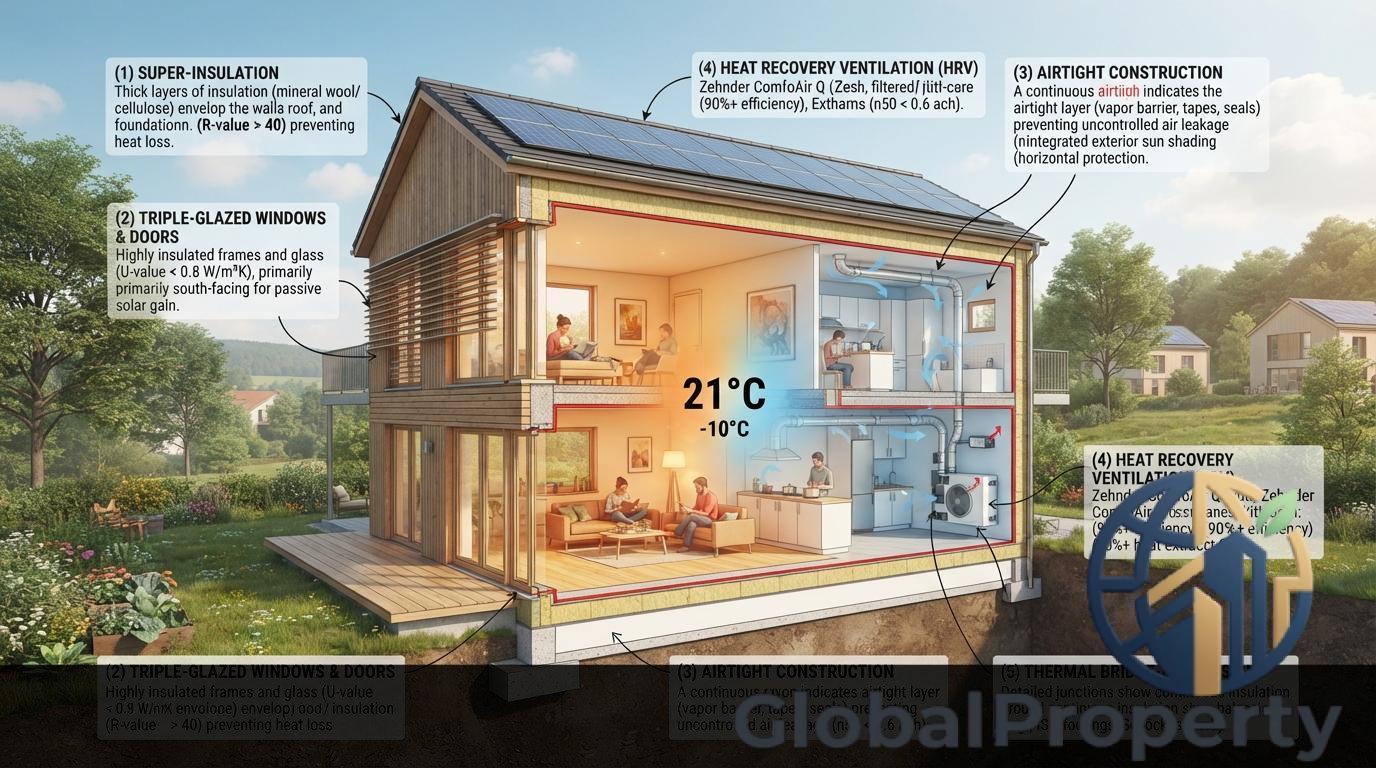
Passive House Design principles focus on optimizing energy efficiency and minimizing the need for active heating and cooling systems in buildings. Key principles include airtight construction, high levels of insulation, thermal bridge-free design, and high-performance windows. By carefully considering orientation, shading, and natural ventilation, Passive House Design aims to achieve comfortable indoor temperatures year-round with minimal energy consumption. Additionally, a mechanical ventilation system with heat recovery helps maintain high indoor air quality while further reducing energy usage.
Energy-Efficient Construction
Energy-efficient construction is at the core of Passive House Design. By utilizing advanced insulation materials, airtight building envelopes, and triple-glazed windows, Passive House buildings minimize heat loss and gain. This results in significantly reduced heating and cooling demands, leading to lower energy bills and environmental impact. Implementing Passive House principles not only enhances comfort and indoor air quality but also contributes to a sustainable and eco-friendly built environment.
Benefits of Passive House Design
Passive House Design offers a multitude of benefits that make it an attractive choice for environmentally-conscious homeowners and builders. One of the key advantages is its exceptional energy efficiency, resulting in significantly lower energy consumption compared to traditional homes. This leads to substantial cost savings on heating and cooling bills over the long term. Additionally, Passive House Design promotes superior indoor air quality by minimizing drafts and ensuring a consistent temperature throughout the home. This not only enhances comfort but also contributes to the overall health and well-being of occupants.
Another benefit of Passive House Design is its sustainability and minimal environmental impact. By reducing the reliance on fossil fuels for heating and cooling, these homes help lower carbon emissions and combat climate change. The use of high-performance building materials and advanced construction techniques further enhances the durability and longevity of Passive House structures, reducing maintenance costs and increasing overall property value. Overall, the benefits of Passive House Design extend beyond individual homeowners to create a more sustainable and resilient built environment for future generations.
Passive House Design Techniques
Passive house design techniques focus on creating highly energy-efficient buildings that require minimal heating and cooling. These techniques include optimizing insulation, airtight construction, high-performance windows, and utilizing passive solar design principles. Insulation is key to reducing heat loss in a passive house, typically using thick insulation in walls, roofs, and floors. Airtight construction helps prevent air leakage, ensuring that the building retains heat efficiently. High-performance windows with multiple panes and low-emissivity coatings help to minimize heat transfer while maximizing natural light.
Ventilation systems in passive house designs are crucial for maintaining indoor air quality while recovering heat from outgoing air. Heat recovery ventilation systems can capture and reuse heat from exhaust air to preheat incoming fresh air, further reducing the need for additional heating. Additionally, passive solar design techniques leverage the sun’s energy for heating in the winter and shading in the summer, optimizing natural light and heat gain. By combining these techniques, passive house designs achieve exceptional energy efficiency and comfort for occupants.
Passive House Design Case Studies
Passive House design case studies provide real-world examples of successful implementation of passive design principles. By examining these projects, one can see how energy-efficient strategies have been applied in various climates and building types. For instance, a case study of a multi-family residential building in a cold climate might showcase the use of high-performance insulation, airtight construction, and heat recovery ventilation to achieve remarkable energy savings. On the other hand, a case study of a commercial office building in a hot climate could highlight the importance of shading devices, natural ventilation, and thermal mass to reduce cooling loads.
Passive House Design vs. Active Heating
Passive House design versus active heating explores the contrast between energy-efficient, passive strategies and traditional heating systems. While active heating systems rely on mechanical equipment to generate heat, passive design focuses on optimizing the building’s envelope and orientation to minimize heat loss and gain. Passive House design aims to create a comfortable indoor environment without the need for constant heating, resulting in significant energy savings and lower carbon emissions. By emphasizing passive strategies such as insulation, airtightness, and solar gain, buildings can reduce their reliance on active heating systems and move towards a more sustainable future.
Passive House Design vs. Active Heating
Passive House Design focuses on creating energy-efficient buildings that rely on natural elements such as sunlight, insulation, and ventilation to maintain comfortable indoor temperatures. By utilizing high-performance windows, airtight construction, and heat recovery ventilation systems, passive houses can significantly reduce energy consumption for heating and cooling.
On the other hand, Active Heating systems require the use of mechanical devices like furnaces, boilers, and heat pumps to regulate indoor temperatures. While active heating systems can provide more immediate control over temperature settings, they often consume more energy and contribute to higher utility costs compared to passive design strategies. Passive House Design promotes sustainability and environmental responsibility by minimizing the reliance on active heating technologies.
Conclusion: The Future of Passive House Design
Passive House Design is undoubtedly the future of sustainable architecture, offering a multitude of benefits for both the environment and inhabitants. As the world becomes more conscious of the impact of buildings on climate change, the demand for energy-efficient structures continues to rise. Passive House Design represents a significant step towards achieving net-zero energy consumption in buildings, thereby reducing greenhouse gas emissions and dependence on fossil fuels.
The future of Passive House Design lies in further innovation and integration of cutting-edge technologies to enhance energy efficiency and comfort levels. With advancements in building materials, construction techniques, and renewable energy systems, Passive House Design is poised to become the standard for environmentally friendly construction worldwide. As regulations tighten and consumer awareness grows, the adoption of Passive House principles will only accelerate, shaping a more sustainable and resilient built environment for generations to come.