
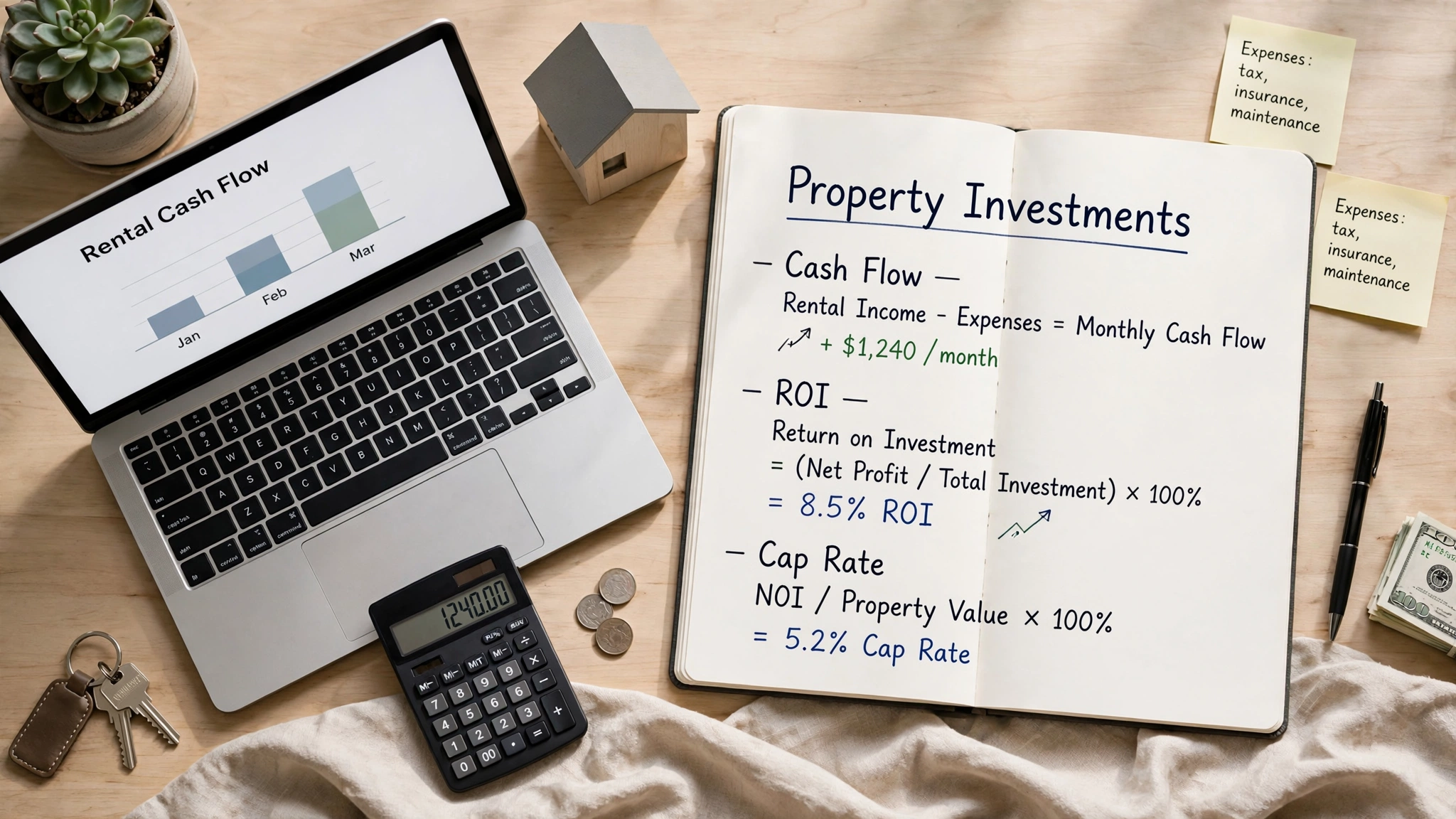
Have you ever found yourself scratching your head over complex property investment terminology like cash flow, ROI, and cap rates? It’s a common challenge for many aspiring real estate investors. The jargon-filled world of property investment can be daunting, leaving you feeling overwhelmed and unsure of where to start. Without a solid understanding of these key concepts, making informed investment decisions becomes a near-impossible task.
Imagine the frustration of pouring your hard-earned money into a property investment without fully grasping how cash flow, ROI, and cap rates impact your returns. Without this knowledge, you risk making costly mistakes that could set back your financial goals for years to come. Poor cash flow management, low ROI, or misunderstanding cap rates can spell disaster for even the most well-intentioned investor. The lack of clarity on these crucial metrics can lead to missed opportunities, financial losses, and a sense of regret over what could have been.
But fear not, for there is a light at the end of the tunnel. By gaining a deep understanding of cash flow, ROI, and cap rates in property investments, you can unlock the secrets to maximizing your returns and building a successful real estate portfolio. Armed with this knowledge, you’ll be able to make informed decisions, identify lucrative investment opportunities, and ultimately achieve financial freedom through strategic property investments. So, buckle up as we dive into the world of property investment metrics, demystify the complexities, and pave the way for your success in the real estate market.
Importance of Cash Flow in Property Investments
Cash flow is a critical aspect of property investments that determines the financial health and sustainability of your real estate portfolio. It represents the amount of money flowing in and out of your investment property, taking into account rental income, expenses, and financing costs. Positive cash flow indicates that your property is generating more income than expenses, offering a steady stream of passive income. This surplus cash can be reinvested into the property, used for property improvements, or distributed as profit to the investor.
On the flip side, negative cash flow can drain your resources, leading to financial strain and potentially forcing you to sell the property at a loss. Understanding the importance of cash flow allows investors to make informed decisions, assess the profitability of a property, and plan for contingencies. By optimizing cash flow through rental income management, expense control, and financing strategies, investors can enhance the long-term viability and success of their property investments.
Factors Affecting Cash Flow in Real Estate
Rental Income
Rental income is a primary driver of cash flow in real estate investments. The amount of rent you can charge for your property directly impacts your cash inflow. Factors such as location, property type, market demand, and amenities play a crucial role in determining the rental value of a property. Conducting thorough market research and setting competitive rental rates can help maximize rental income and boost cash flow.
Operating Expenses
Managing operating expenses is essential for maintaining positive cash flow in real estate investments. Expenses such as property taxes, insurance, maintenance, utilities, and property management fees can significantly impact your cash flow. Implementing cost-saving measures, negotiating service contracts, and regular maintenance can help control expenses and improve cash flow. Understanding these factors and actively managing them can ensure a healthy cash flow stream and enhance the overall profitability of your real estate investments.
Calculating ROI for Real Estate Investments
ROI (Return on Investment) is a critical metric for evaluating the profitability of real estate investments. To calculate ROI accurately, you need to consider both the initial investment cost and the potential return from the property. The formula for ROI in real estate is generally calculated by dividing the net profit from the investment by the total cost of the investment.
Understanding ROI is essential for investors to assess the efficiency of their real estate investments and make informed decisions. By analyzing the ROI of different properties, investors can prioritize investments that offer the highest returns and optimize their portfolio for long-term financial success.
Analyzing Cap Rates for Property Investment Decision-making
Cap Rates (Capitalization Rates) are a key indicator used by real estate investors to evaluate the potential return on investment of a property. The cap rate is calculated by dividing the property’s net operating income by its current market value. A higher cap rate typically indicates a higher potential return on investment, while a lower cap rate may suggest lower profitability.
Investors often use cap rates to compare different investment opportunities and assess the risk associated with each property. By analyzing cap rates, investors can make well-informed decisions about which properties align with their investment goals and strategy, ultimately maximizing their returns in the real estate market.
Understanding Cap Rates and Their Significance
Cap rates (Capitalization rates) are a crucial metric in real estate investing that help investors evaluate the potential return on a property. The cap rate is calculated by dividing the property’s net operating income (NOI) by its current market value or purchase price. A higher cap rate indicates a higher potential return, while a lower cap rate suggests a lower return. Understanding cap rates is essential for investors to compare different investment opportunities and make informed decisions.
Significance of cap rates: Cap rates provide a quick way to assess the profitability of a property investment. They also help investors understand the level of risk associated with a particular property. Higher cap rates may indicate higher risks, such as lower property value or potential maintenance issues. Lower cap rates, on the other hand, may suggest a safer investment with potential for appreciation. By analyzing cap rates, investors can determine whether a property aligns with their investment goals and risk tolerance.
Factors Affecting Cash Flow in Real Estate
Cash flow in real estate is influenced by various factors that can impact the profitability of an investment property. One key factor is the rental income generated from tenants occupying the property. The rental amount, vacancy rates, and lease terms all play a critical role in determining the cash flow. Additionally, operating expenses such as maintenance costs, property management fees, insurance, and property taxes can significantly affect the overall cash flow of a real estate investment.
Market conditions also play a crucial role in determining cash flow. Factors such as supply and demand dynamics, economic trends, and interest rates can impact rental prices and property values, thereby affecting cash flow. Moreover, the location of the property, local regulations, and potential for future development in the area can also influence cash flow in real estate investments. Understanding these factors and their impact on cash flow is essential for making informed investment decisions in the real estate market.
Maximizing ROI through Property Investment Strategies
Maximizing ROI (Return on Investment) in property investments requires strategic planning and implementation of various investment strategies. One effective strategy is to focus on properties with high potential for appreciation in value over time. By investing in properties located in high-growth areas or emerging markets, investors can benefit from capital appreciation, thus increasing their ROI.
Another important strategy to maximize ROI is to optimize rental income through efficient property management and tenant selection. By maintaining low vacancy rates, increasing rental rates when appropriate, and minimizing operating expenses, investors can enhance cash flow and ultimately improve their ROI. Additionally, leveraging financing options such as mortgages and loans can help investors increase their purchasing power and potentially boost their ROI through the use of leverage. By implementing a combination of these strategies and staying informed about market trends, investors can maximize their ROI in the competitive real estate market.
Factors Affecting Cash Flow in Real Estate
Cash flow in real estate investments can be influenced by various factors that impact the income generated and expenses incurred. One critical factor is the rental income received from tenants, which should ideally cover the mortgage payments, property taxes, insurance, maintenance costs, and vacancy losses. Market conditions and location also play a significant role in determining cash flow, as rental rates and property values can fluctuate based on demand and economic trends. Additionally, the condition of the property and ongoing maintenance requirements can affect cash flow by impacting expenses and potential rental income. It is essential for real estate investors to carefully analyze these factors to ensure a positive cash flow and sustainable investment performance.
Maximizing ROI through Property Investment Strategies
Maximizing return on investment (ROI) in property investments requires strategic planning and execution of various investment strategies. One effective approach is to focus on properties with high potential for rental income growth and appreciation in value. By conducting thorough market research and due diligence, investors can identify properties in emerging or high-demand areas that offer promising ROI prospects. Implementing value-adding initiatives such as renovations, upgrades, or property management improvements can also enhance the property’s ROI potential. Diversifying the investment portfolio with different types of properties and locations can help spread risk and optimize overall ROI. Ultimately, adopting a proactive and data-driven approach to property investment strategies can lead to maximizing ROI and achieving long-term investment success.
7. Analyzing Cap Rates for Property Investment Decision-making
Cap rates are a fundamental metric in real estate investment analysis, providing a quick way to evaluate the potential return on a property. By comparing the property’s net operating income (NOI) to its current market value, investors can determine the cap rate, which serves as a measure of the property’s profitability. A higher cap rate indicates a higher potential return, while a lower cap rate suggests lower profitability.
Importance of Cap Rate Analysis
When analyzing cap rates for property investment decision-making, it’s crucial to consider market trends, property location, and the property’s condition. A thorough understanding of cap rates can help investors identify lucrative opportunities, assess risk levels, and make informed investment decisions. By comparing cap rates across different properties, investors can prioritize investments that offer the best potential returns within their risk tolerance.