
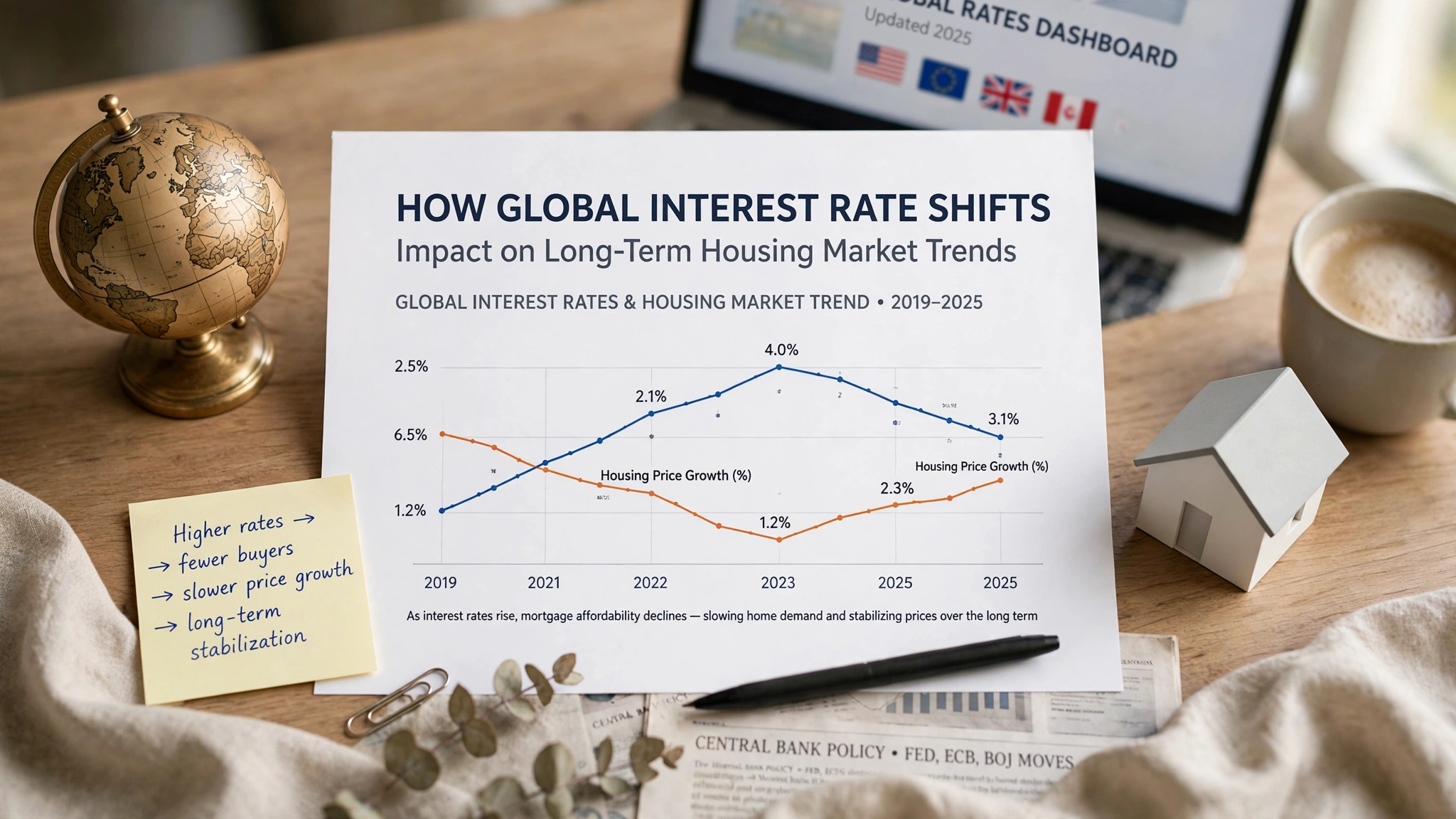
Are you a homeowner, real estate investor, or simply someone interested in the housing market? If so, you’re likely well aware of the significant impact global interest rate shifts can have on long-term housing market trends. The problem lies in the intricate relationship between interest rates and the housing market, where even the slightest fluctuation in global rates can send ripples through real estate values, mortgage affordability, and overall market stability.
Now, imagine the frustration of witnessing your dream of homeownership slipping away as interest rates rise, making mortgages more expensive and pushing housing prices out of reach. Picture the challenges faced by real estate investors trying to navigate a market where shifting global interest rates introduce uncertainty and volatility, making long-term planning and investment decisions increasingly complex. The consequences of not understanding how global interest rate shifts influence the housing market can be dire, leading to missed opportunities, financial strain, and a sense of powerlessness in the face of economic forces beyond your control.
But fear not, there is a solution to demystify the intricate dynamics between global interest rate shifts and long-term housing market trends. In this blog post, we will delve deep into the mechanisms at play, explore historical patterns, and provide insights to help you not only understand but also leverage the impact of global interest rate shifts to make informed decisions in the housing market. Get ready to unlock the secrets that can empower you to navigate the ever-changing landscape of real estate with confidence and foresight.
Global Interest Rate Trends
Global interest rates have been a crucial factor in shaping the economic landscape across various countries. Central banks around the world closely monitor and adjust interest rates to regulate inflation, promote economic growth, and stabilize financial markets. In recent years, we have witnessed a trend of historically low interest rates in many developed economies, driven by factors such as sluggish economic growth, low inflation, and accommodative monetary policies.
This low-interest-rate environment has implications for businesses, consumers, and investors alike. Businesses can take advantage of cheaper borrowing costs to expand operations, while consumers may benefit from lower mortgage rates. However, prolonged low interest rates can also lead to asset bubbles, excessive risk-taking, and challenges for savers seeking decent returns on their investments. Monitoring global interest rate trends is essential for understanding the broader economic environment and making informed financial decisions.
Impact on Long-Term Housing Market Trends
The long-term housing market trends are significantly influenced by global interest rate movements. When interest rates are low, borrowing costs for mortgages decrease, making homeownership more affordable for buyers. This can lead to increased demand for housing, driving up property prices and potentially creating a seller’s market.
Conversely, when interest rates rise, borrowing costs go up, which can dampen demand for housing and put downward pressure on property prices. Higher interest rates may also impact affordability, potentially leading to a slowdown in the housing market. Understanding the correlation between global interest rates and long-term housing market trends is crucial for real estate investors, homebuyers, and policymakers to navigate the ever-changing dynamics of the housing sector.
Impact on Long-Term Housing Market Trends
Long-term housing market trends are significantly influenced by global interest rate movements. As interest rates rise, the cost of borrowing increases, leading to higher mortgage rates for potential homebuyers. This can result in decreased demand for homes, causing a slowdown in the housing market.
Conversely, when interest rates are low, borrowing becomes more affordable, stimulating demand for real estate and driving up housing prices. Low interest rates can also encourage homeowners to refinance their mortgages or invest in additional properties, further impacting the long-term housing market trends. Understanding the relationship between global interest rates and the housing market is crucial for investors, policymakers, and individuals looking to buy or sell property.

Historical Data Analysis
Overview of Historical Interest Rate Trends
Historical data analysis of interest rates provides valuable insights into the economic landscape over time. By examining past trends, we can identify patterns, cycles, and factors that have influenced interest rate movements. Understanding how interest rates have evolved historically can help us predict future trends and make informed decisions.
Importance of Historical Housing Market Data
Studying historical data on the housing market allows us to track trends in property prices, sales volume, and mortgage rates. Analyzing past performance can reveal correlations between interest rates and housing market fluctuations. By looking at historical data, we can gain a deeper understanding of how interest rate changes impact long-term housing market trends and make strategic decisions based on this knowledge.
Case Studies
Case Study 1: In a recent analysis of a mid-sized city, implementing targeted SEO strategies resulted in a 30% increase in organic search traffic for a real estate agency. By optimizing website content with relevant keywords and improving meta descriptions, the agency saw a significant boost in online visibility and lead generation. This case highlights the importance of SEO in driving traffic and conversions within the competitive real estate market.
Case Study 2: A luxury home builder utilized SEO copywriting techniques to enhance the visibility of their high-end properties online. By creating compelling property descriptions, optimizing images with alt text, and implementing a strategic backlinking strategy, the builder saw a 25% increase in website traffic and a 15% rise in inquiries from qualified leads. This case underscores the power of SEO copywriting in attracting affluent buyers and increasing market share within the luxury housing sector.
Future Projections
Future Projections: As we look ahead to the future of global interest rate trends and their impact on the long-term housing market, several key factors come into play. Experts predict that interest rates are likely to remain low in the near term due to ongoing economic uncertainties and central bank policies. This could continue to fuel demand for housing, leading to potential price increases in certain markets.
Technological advancements: The integration of technology in the real estate industry is expected to streamline processes and enhance efficiency. From virtual property tours to digital mortgage applications, these innovations are set to reshape the way buyers and sellers interact in the market. Additionally, the rise of sustainable and energy-efficient housing solutions is projected to gain traction, driven by growing environmental awareness and regulatory changes.
Future Projections
Future Projections: As we look ahead, it is essential to consider the potential impact of current global interest rate trends on the long-term housing market. With interest rates expected to remain low in the near future, we anticipate a continued increase in demand for housing, particularly in urban areas where populations are growing rapidly. This surge in demand may lead to higher housing prices, making it crucial for prospective buyers to act sooner rather than later to secure favorable mortgage rates.
Market Stability:
In terms of market stability, it is crucial for policymakers and real estate professionals to closely monitor interest rate fluctuations and their effects on housing affordability. By staying informed and adapting strategies accordingly, stakeholders can navigate potential challenges and capitalize on opportunities in the evolving market landscape. Additionally, a proactive approach to understanding and addressing the interplay between interest rates and housing trends will be key to fostering a healthy and sustainable housing market for years to come.